Oriole bird feeders: How to Attract Orioles Fast

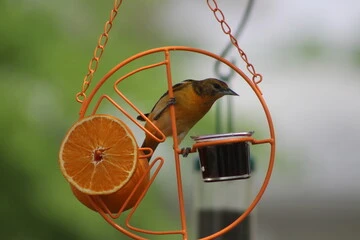
The Magic of the Orange Flash
Every year, right when the spring air starts to feel a bit thicker and the trees finally stop looking like skeletons, I start watching the sky. I am looking for that specific, impossible shade of orange. When the first Baltimore Oriole hits my yard, it feels like the season has officially started. But let’s be real: these birds are picky. You can’t just throw out some birdseed and expect them to show up. You need specific oriole bird feeders if you want them to stick around for more than five minutes.
I remember my first year trying this. I put out a standard hummingbird feeder and a few orange slices on a fence post. I saw one bird, it looked at the orange, looked at me, and flew to the neighbor’s yard. I was doing it wrong. Orioles have specific needs. They want height, they want color, and they want very specific sugars. Over the years, I have tested just about every setup under the sun. Some worked, some were a total waste of money.
In this guide, I want to share what I have learned about the best oriole feeders and how you can make your yard the hottest spot on the migration map.
Table of Contents
Why You Need a Dedicated Feeder
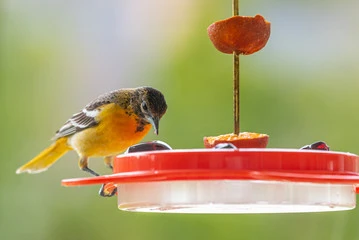
Most people think a bird is a bird. If it drinks nectar, a hummingbird feeder should work, right? Well, yes and no. Orioles are much bigger than hummingbirds. They can’t hover like a tiny drone. They need a place to sit. They need a perch that can actually hold their weight without dumping sugar water all over the grass.
When you look at oriole feeder reviews, you will notice a common theme: the good ones are orange. This isn’t just for decoration. Orioles are naturally drawn to the color orange. It signals to them that there is fruit or nectar nearby. While hummingbirds love red, orioles see orange as a dinner bell.
Types of Feeders You Should Know About
There are three main ways to feed these birds, and usually, the best approach is to use a mix of all three.
- Nectar Feeders: These look like hummingbird feeders but have larger ports and bigger perches.
- Jelly Feeders: These usually have small cups or dishes where you can scoop in some grape jelly.
- Fruit Feeders: These are often simple spikes or cages where you can impale an orange half.
In my experience, a multi-purpose feeder is the way to go. Some of the most popular designs have a reservoir for nectar, a little cup for jelly, and two spikes for oranges. It saves space and gives the birds a full buffet.
The All-Important Nectar Recipe
Don’t buy the red or orange dyed stuff from the store. It is expensive and usually contains chemicals the birds don’t need. You can make a better version at home in about five minutes.
For an oriole nectar recipe, you want a slightly different ratio than you use for hummingbirds. While hummers usually get a 1:4 ratio, orioles often prefer a 1:6 ratio (one part sugar to six parts water). They get a lot of their sugar from fruit and jelly, so the nectar doesn’t need to be quite as thick.
Boil the water, stir in plain white granulated sugar until it dissolves, and let it cool completely. Never use honey, brown sugar, or artificial sweeteners. Honey can grow a fungus that is fatal to birds, and fake sugars offer zero energy for their long flights.
The Jelly Factor: Why They Love Grape
If you ask any veteran bird watcher what the secret weapon is, they will tell you: grape jelly. It sounds weird, I know. Why would a wild bird want Smucker’s? But they go crazy for it. It provides a massive burst of energy that they need during the nesting season.
When choosing foods for orioles, look for grape jelly that doesn’t have high fructose corn syrup if you can find it. Organic is great, but the main thing is that it is smooth. Chunky jelly or jams with seeds can sometimes be harder for them to manage.
I usually put out about two tablespoons at a time. If you put out a giant bowl, it will just get crusty in the sun or attract every ant in the county. Freshness is key.
Where to Put Your Feeders for Success
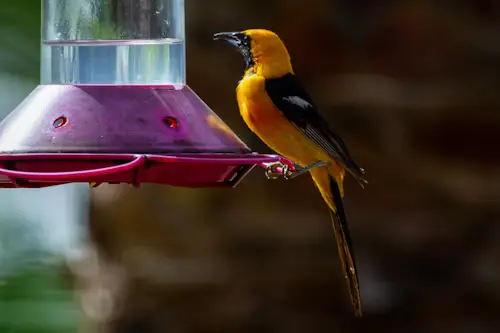
I used to hide my feeders under the eaves of my porch because I wanted to see the birds from my window. I didn’t see a single one. Orioles feeder placement is perhaps the most misunderstood part of the hobby.
These birds are shy at first. They are also migratory, meaning they are flying high above looking for a landing spot. If your feeder is tucked away under a tree or a porch roof, they won’t see it.
Put your feeders out in the open. Use a shepherd’s hook in the middle of the yard or hang them from a high, visible branch. Once the birds find the feeder and realize it is a safe spot, then you can gradually move it closer to your house over a week or two.
Pro-Tip: Timing is Everything
If you wait until you see an oriole to put your feeder out, you are already too late. You need to have the food ready about a week before they are expected to arrive in your area. They are scouts. If a scout flies over and sees an empty yard, he won’t stop. But if he sees a bright orange feeder filled with jelly, he will call the whole family.
Dealing with Pests and Problems
Having a feeder full of sugar water and jelly is basically an invitation for every ant, wasp, and raccoon in the neighborhood. It can be a mess if you aren’t prepared.
| Pest | Solution |
|---|---|
| Ants | Use an ant moat filled with water above the feeder. |
| Wasps | Look for feeders with bee guards or move the feeder to a shadier spot. |
| Raccoons | Bring the feeders in at night or use a baffle on your pole. |
| Squirrels | Use a weight-sensitive perch or a baffle. |
| Mold | Clean the feeder every 3 days with hot water and vinegar. |
Cleaning is the part nobody likes, but it is the most important. If that nectar gets cloudy, it is fermented. If it is fermented, it can make the birds sick. I make it a habit to swap my feeders every Monday and Thursday, regardless of how much is left inside.
Creative Oriole Feeder Ideas for the DIY Enthusiast
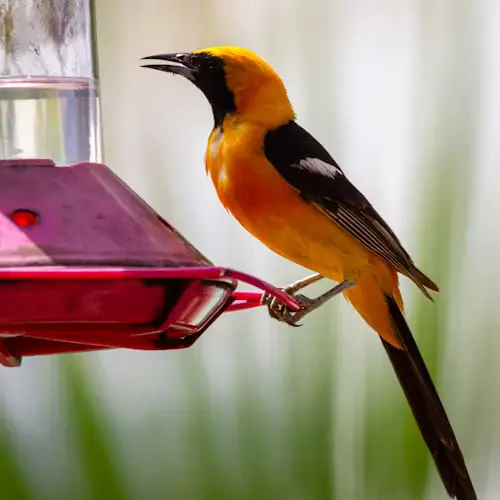
If you don’t want to drop forty bucks on a fancy plastic setup, you can get creative. Some of the best oriole feeder ideas I have seen are actually the simplest.
One of my favorites is the ‘Orange Hammock.’ You take a piece of wire, bend it into a small loop that can hold an orange half, and hang it from a string. It is low-profile and the birds love it because they can grip the wire easily.
Another idea is using old glass jars. You can mount a small jar sideways on a wooden board and fill it with jelly. The wood provides a natural perch, and the glass is incredibly easy to toss in the dishwasher. Just make sure there are no sharp edges.
The Seasonal Shift: What to Feed When
Oriole needs change as the season progresses.
- Early Spring: High sugar needs. Focus on nectar and jelly to give them energy after migration.
- Mid-Summer: Nesting season. Keep the jelly flowing, but they will also start hunting for insects to feed their chicks.
- Late Summer: Fruit focus. This is when they really go for the orange halves and even dark berries like mulberries or blueberries.
- Fall: Bulking up. They need calories for the trip back south. Don’t take your feeders down too early!
I usually keep my feeders up until I haven’t seen a bird for two full weeks. Sometimes stragglers from further north will stop by late in the season, and your yard might be the pit stop that saves their life.
FAQs About Oriole Bird Feeders
Why aren’t orioles coming to my oriole bird feeders?
It is usually one of three things: timing, visibility, or cleanliness. Make sure your feeders are out early (late April for most of the US), place them in an open area where they can be seen from the sky, and ensure the nectar is fresh. If the sugar has fermented, they won’t touch it.
Can I use red nectar for orioles?
While they might drink it, orange is their preferred color. More importantly, you should avoid any nectar with dye. Clear sugar water is much safer for the birds’ kidneys and overall health.
How high should I hang the feeder?
I find that seven to ten feet off the ground is the sweet spot. It is high enough to make them feel safe from cats but low enough for you to reach for refilling.
What kind of jelly is best?
Plain grape jelly is the gold standard. Avoid ‘grape spread’ or anything with artificial sweeteners like xylitol, which is toxic to animals. Simple, cheap grape jelly is usually exactly what they want.
Do orioles eat mealworms?
Yes! Especially during the height of summer when they are raising babies. If you have a feeder with a small tray, tossing in some dried or live mealworms can attract them when they are looking for protein rather than just sugar.
Keeping the Magic Alive
Feeding orioles is a bit more work than feeding goldfinches or chickadees. You have to deal with sticky jelly, ants, and the constant need to scrub out sugar reservoirs. But the first time you see that bright orange bird land and start scooping up jelly, all that work disappears. It is a connection to a wilder world that most people never get to see.
If you are just starting out, don’t get discouraged if they don’t show up the first day. Keep the food fresh, keep the feeders bright, and keep watching. Once you get your first pair, they will likely return to the exact same spot year after year. It’s a friendship that lasts a lifetime.
Ready to upgrade your backyard? Start with one good feeder and a jar of jelly. You will be surprised at how fast your yard becomes the talk of the bird neighborhood. Go get your setup ready before the first scout flies over!