Zebra Finches Age and Gender: Best How-To for Caring

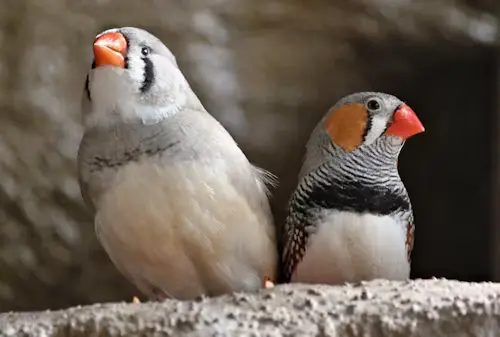
I remember standing in front of a massive cage at the local pet shop, staring at twenty tiny, fluttering birds. I wanted a pair of zebra finches, specifically a male and a female. The teenager working the counter pointed at two birds that looked identical to me. He said, “Yeah, I think those are a pair.” Fast forward three months, and I had two very loud males who spent most of their time shouting at each other rather than building a nest. That was my first lesson in Zebra Finches Age and Gender identification. It is not always as obvious as people think, especially if the birds are young or belong to certain color mutations.
Understanding your bird’s identity is about more than just naming them. It helps you understand their social needs, their potential for breeding, and even their health. A bird’s age tells you what kind of diet they need, while their gender explains their behavior. If you are tired of guessing, this guide is for you. We will go over everything from the “black beak” stage of babies to the subtle differences in adult feather patterns.
Table of Contents
Visual Signs: Male vs Female Zebra Finch Differences
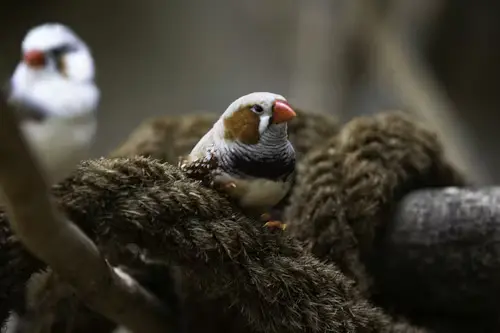
For standard “gray” zebra finches, the differences are quite clear once they hit adulthood. If you have a bird that looks like the classic wild version, you have an easy job. The males are the ones with the extra paint jobs. They have bright orange cheek patches that look like little circles of blush. They also have a chestnut-colored strip along their sides (flanks) with white polka dots. If your bird has these dots and orange cheeks, it is a male.
Females are more understated. They lack the orange cheeks and the spotted flanks. Their chests are usually a solid, clean gray or white, depending on the mutation. Both genders have the “tear mark” black line under the eye, so do not let that fool you into thinking they are all the same. The male vs female zebra finch differences are usually established by the time the bird is two to three months old. Before that, everyone looks a bit like a female, which leads to many mistakes at the pet store.
The Beak Tells the Story: Zebra Finch Beak Color Gender
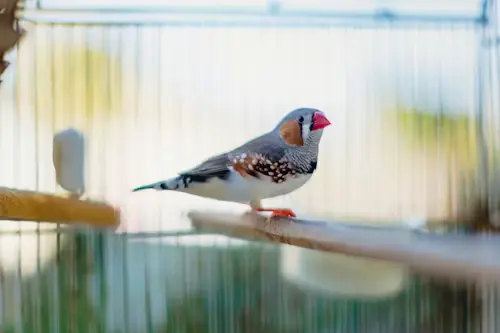
If you have a mutation where the feathers do not show the typical markings (like a solid white finch), you have to look at the beak. This is a reliable way to tell them apart, though it takes a little practice to see the subtle shades. Male zebra finches have a deep, dark red beak. It is often described as the color of a ripe cherry. Female beaks are more of an orange or a light coral color. It is a brighter, lighter shade than the male’s.
When you put a male and female side by side, the difference in zebra finch beak color gender markers is obvious. The male’s beak looks solid and heavy in color, while the female’s looks delicate. However, this only works for adult birds. If the bird is still a baby, the beak will be a completely different color altogether, which we will discuss in the age section.
The Ultimate Test: The Zebra Finch Song
If you are still unsure, just listen. Zebra finches are social, but only the males are the true singers. Females do make noise, but it is a series of simple “meeps” and “honks.” It sounds a bit like a tiny tin horn. If your bird is letting out a complex, chirpy song that sounds like a frantic melody, you have a male. Males use this song to attract mates and defend their little corner of the cage.
Males start practicing their song early. Even young males who haven’t fully grown their orange cheeks will start “sub-songing,” which is like a bird version of babbling. If you see a young bird sitting still, throat feathers vibrating, making a quiet and messy attempt at a song, that is a young male finding his voice. This is one of the most reliable zebra finch sexing methods because behavior rarely lies.
How to Tell Zebra Finch Age: The Three Stages
Determining the exact age of a finch is hard after they reach one year, but we can easily categorize them into three life stages: juvenile, young adult, and senior. Understanding how to tell zebra finch age depends on looking at their beak, their legs, and their feathers.
1. The Juvenile Stage (0 to 2 Months)
This is the easiest age to identify. When zebra finches leave the nest, they have black beaks. It looks like they dipped their faces in ink. Over the next several weeks, this black fades from the base of the beak toward the tip, turning into the adult orange or red. If you see a bird with any black on its beak, it is less than two months old.
2. Young Adult Stage (3 Months to 4 Years)
Once the beak is fully colored and the first molt is finished, the bird is a young adult. This is when they are at their most active. Their feathers are tight and sleek. Their legs and feet are smooth and pink or orange, without any thick scales. A bird in this age range will be constantly moving, hopping, and exploring. Most zebra finches in pet stores are in this range, usually between 4 and 8 months old.
3. The Senior Stage (5+ Years)
Zebra finches can live 7 to 10 years in captivity if they are well cared for. As they get older, you will notice zebra finch maturity signs that indicate they are slowing down. Their legs might become more scaly or thickened. They might develop small cataracts in their eyes, making the eye look cloudy. Their activity levels drop, and they might spend more time napping on a perch rather than flying laps around the cage. Their feathers might also look a bit more “tired” or less glossy than they used to be.
Zebra Finch Life Stages Table
| Stage | Age Range | Beak Appearance | Leg/Foot Texture | Activity Level |
|---|---|---|---|---|
| Hatchling | 0-21 Days | Black/Dark | Very soft, pink | Stationary in nest |
| Fledgling | 3-6 Weeks | Solid Black | Soft, smooth | Clumsy flying |
| Juvenile | 6-12 Weeks | Changing (Black to Orange) | Smooth | High energy |
| Adult | 3 Months – 5 Years | Solid Red or Orange | Smooth, colorful | Peak energy/Breeding |
| Senior | 5+ Years | Solid Red or Orange | Scaly or thickened | Moderate to Low |
Maturity and Breeding Readiness
Just because a bird has its adult colors doesn’t mean it should be breeding. Sexual maturity happens around 3 months, but physical maturity takes a bit longer. If a female is too young when she starts laying eggs, she is at a higher risk for egg binding, which is a life-threatening condition where the egg gets stuck. I usually recommend waiting until a bird is at least 6 to 8 months old before giving them a nest box. The zebra finch maturity signs to look for include a fully colored beak and a stable, confident temperament. Younger birds are often too flighty or easily stressed to be good parents.
Handling Difficult Mutations
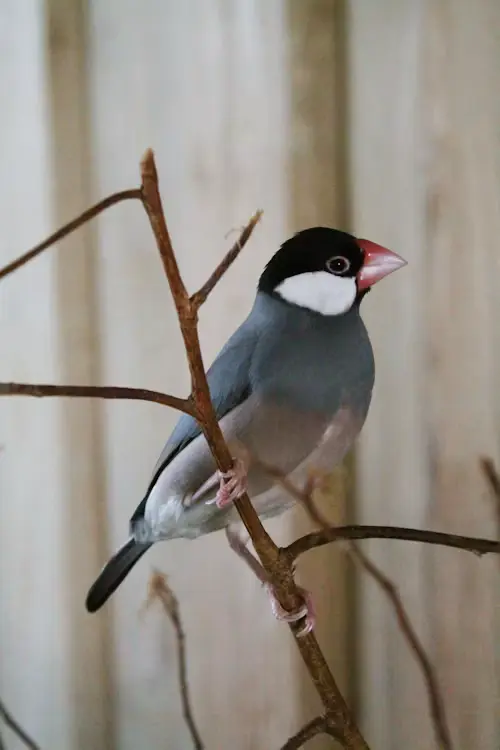
White zebra finches are the bane of new owners trying to figure out gender. Since they lack all the gray, orange, and black markings, you are left with only the beak color and the song. In some cases, even the beak color can be tricky if the bird has a specific genetic background. If you have a white finch, spend an afternoon watching them. If one bird is constantly singing and dancing on the perch, that is your male. If the other one just watches and “honks,” that is the female. I have seen many people buy two white finches thinking they are a pair, only to realize later they have two of the same gender because they didn’t wait to hear the song.
Common Behavior Clues
Beyond the physical, behavior is a great indicator. Males are the aggressors but also the dancers. A male zebra finch will perform a little dance for a female, hopping from side to side and puffing out his feathers to look bigger. He will also be the one searching for nesting material. If you see a bird carrying a piece of dried grass or a stray feather around the cage, it is likely a male trying to start a home. Females will participate in building, but the male usually initiates the process. If you have two birds and one is constantly following the other around while singing, you can be fairly certain of their roles.
Health and Age
As birds age, their needs change. A young bird needs plenty of protein and calcium for growth and feather development. A senior bird might need more easily accessible food and lower perches if they develop arthritis. Keeping track of when you got your bird is the best way to monitor their life stage, but if you adopted a bird without a history, look at those leg scales. They are the closest thing a bird has to wrinkles. Smooth legs equal a young bird; rough, flaky legs equal an older one. However, keep in mind that poor nutrition can also cause rough skin, so it is just one piece of the puzzle.
FAQs about Zebra Finches Age and Gender
At what age do zebra finches get their orange cheeks?
Male zebra finches typically start showing their orange cheek patches during their first molt, which begins around 6 to 8 weeks of age. By 12 to 14 weeks, the patches are usually fully formed and bright. Before this time, both males and females look mostly gray.
Can a female zebra finch ever sing?
Generally, no. Female zebra finches do not have the brain structures required to produce a complex song. They are limited to simple one or two-note calls. If your bird is singing a long, varied melody, it is almost certainly a male.
How can I tell the age of a zebra finch with a red beak?
Once the beak turns solid red (male) or orange (female), it means the bird is at least 2 to 3 months old. After this point, you have to look at the scales on the legs and the clarity of the eyes to estimate age. Smooth legs suggest a bird under 3 or 4 years old, while scaly legs often indicate a senior bird.
Why is my zebra finch’s beak turning black?
If your bird is an adult and its beak is turning black, this is usually a sign of a health issue or a nutritional deficiency. However, if it is a baby, a black beak is perfectly normal and will change to orange or red as the bird matures.
Is there a difference in size between males and females?
There is no significant size difference between the genders. While some individuals might be slightly larger or smaller, you cannot use body size as a reliable way to determine if a zebra finch is male or female.
Wrapping Up Your Bird Journey
Telling the difference in your bird’s identity doesn’t have to be a guessing game. By looking at the beak, listening for the song, and checking for those tell-tale orange cheeks, you can quickly identify your pet’s gender. Age is a bit more of an art, but the transition from a black beak to a red one gives you a clear window into their early life. Once you know who is who, you can provide the best possible environment for them to thrive. If you are looking to add more birds to your flock, take a second look at the beaks and listen for the songs before you head to the checkout. It will save you a lot of surprises later on. If you need more help with your feathered friends, feel free to explore our other guides on bird care and behavior.