Cockatiel Age and Gender: Happy Proven Expert Tips

The Puzzle of Cockatiel Age and Gender
You just brought home a beautiful grey bird with bright orange cheeks. The person at the pet store said it is probably a male and maybe six months old. But how do they really know? In the world of bird ownership, figuring out Cockatiel Age and Gender is one of the biggest challenges you will face. It is not like looking at a puppy or a kitten where the signs are obvious. Birds hide their secrets well.
I have spent years watching these birds grow from tiny, awkward dinosaurs into graceful flyers. I have seen ‘males’ suddenly lay eggs and ‘babies’ turn out to be senior citizens. It happens more often than you think. If you want to provide the best life for your bird, you need to know who they are. This guide will walk you through the physical signs, the behavioral quirks, and the scientific methods used to solve the mystery of your bird’s identity.
Table of Contents
How to Determine Your Bird’s Age
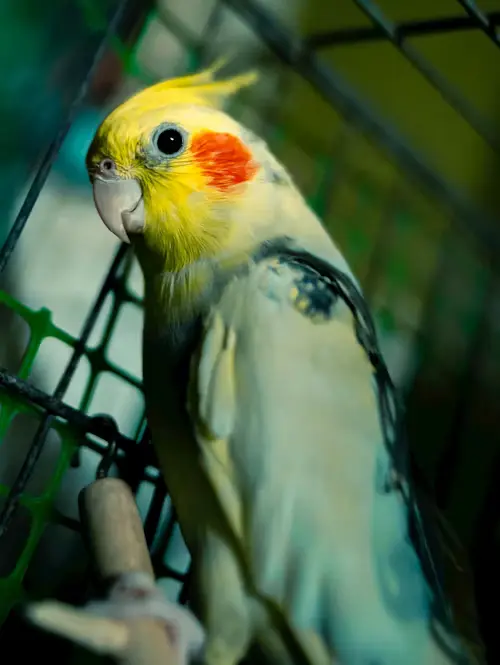
Estimating the age of a cockatiel is much harder than sexing them. Once a bird reaches adulthood, which is around one year old, they look pretty much the same for the next fifteen years. However, if you look closely at their feet, their beak, and their eyes, you can find clues. Younger birds have a certain ‘softness’ to them. Their beaks are smooth and often have a pinkish hue. Their feet are supple, and their nails are short and sharp.
The Juvenile Phase
A juvenile cockatiel is usually under nine months old. At this stage, they still have their ‘baby’ feathers. If you look at a cockatiel age chart, you will see that the first major milestone is the first molt. This usually happens between six and nine months. Before this molt, all cockatiels look like females. They have barred tail feathers and spots under their wings. If your bird still has these markings and has not started losing feathers yet, they are likely less than half a year old.
Signs of an Aging Bird
As birds get older, their scales on their feet become more pronounced and rougher. An older bird might have a beak that looks a bit more ‘weathered’ with visible growth lines. You might also notice that senior birds are less active and spend more time napping on two feet rather than tucking one up. Knowing the cockatiel lifespan by age is helpful here. A cockatiel can live 20 to 25 years with great care, so a ten-year-old bird is really only in its middle age.
The Great Gender Debate: Male or Female?
Once you have a rough idea of the age, you can start looking at the sex. This is where things get interesting. In the wild, cockatiels are dimorphic, meaning males and females look different. But we have bred so many different colors and patterns (mutations) that the old rules do not always apply. If you are trying to figure out how to sex a cockatiel, you have to look at the specific mutation of your bird.
Visual Sexing in Grey Cockatiels
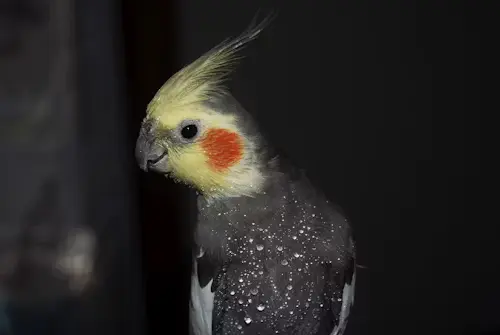
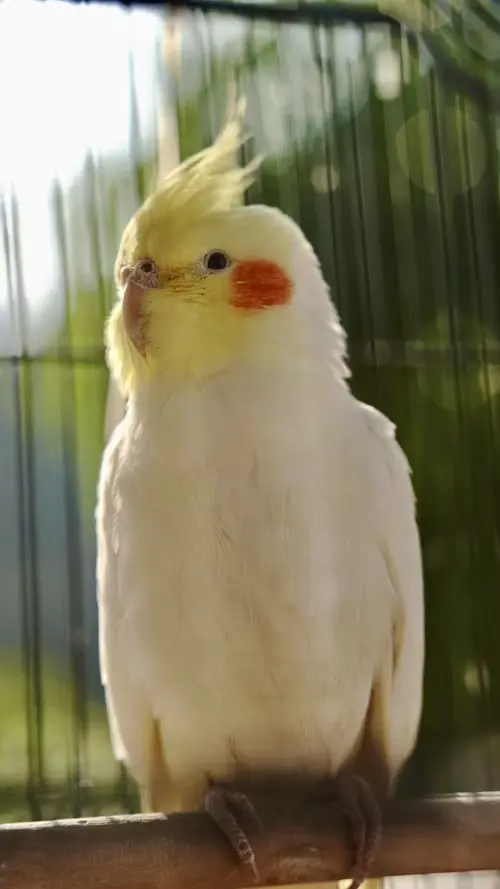
If you have a standard Grey cockatiel, you are in luck. These are the easiest to sex visually. After the first molt, a male’s face will turn a bright, solid yellow. His orange cheek patches will become incredibly vibrant. His tail feathers will turn solid dark grey or black. The female, however, keeps a duller, greyish face. Her cheek patches stay a bit more muted, and she keeps the beautiful horizontal bars on the underside of her tail feathers. If your bird is over a year old and still has those stripes on the tail, you almost certainly have a girl.
The Difficulty with Mutations
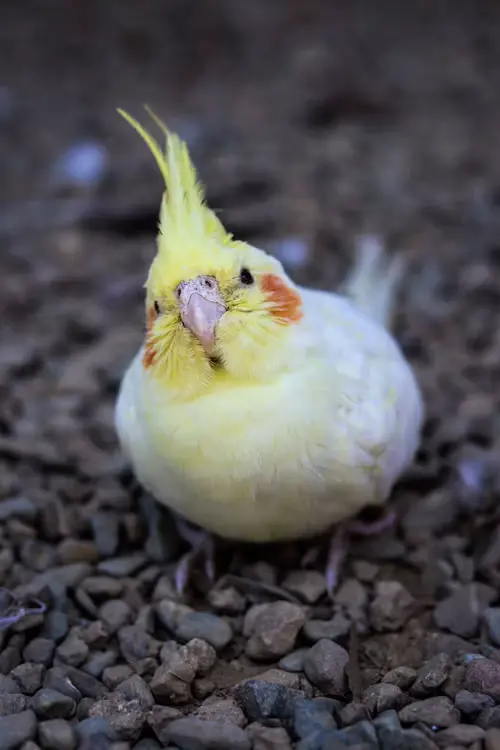
It gets harder with Lutinos (the yellow ones) and Pieds (the splotchy ones). In Lutinos, you have to hold the bird up to a bright light and look for very faint yellow spots or bars on the wings and tail. If they are there after the first year, it is a female. For Pied cockatiels, visual sexing is almost impossible. The white and yellow patches mess up the usual patterns, making it a total guessing game. In these cases, you have to rely on behavior.
Comparing Cockatiel Male vs Female Behavior
Behavior is often a better indicator than feathers, especially in young birds or difficult mutations. Males are the performers of the bird world. They love to hear their own voices. If your bird is constantly whistling, mimicking sounds, or ‘talking’ to their toys, there is a very high chance they are male.
| Behavior | Likely Male | Likely Female |
|---|---|---|
| Whistling/Singing | Very Frequent and Complex | Rare and Simple |
| Heart Wings | Common (lifting wings slightly) | Very Rare |
| Head Banging | Frequent on hard surfaces | Almost Never |
| Aggression/Hissing | Can be territorial | Usually more docile (unless nesting) |
| Egg Laying | Never | Yes (The only 100% proof) |
Males also do something called ‘heart wings.’ They will slightly lift their wings away from their body so that, when viewed from behind, their silhouette looks like a heart. They do this while strutting or whistling to impress you or their favorite mirror. Females are generally quieter. They might chirp or scream if they are excited or scared, but they rarely break into a full-blown song. Females are also the ones who might start looking for dark corners or ‘nesting’ sites behind books or under furniture.
When Do Cockatiels Mature?
You might be wondering when do cockatiels mature enough to show these signs. Most cockatiels reach sexual maturity between 6 and 12 months. This is a rocky time for many owners. Much like human teenagers, your sweet little bird might suddenly become a nippy, hormonal mess. They might start showing ‘mating’ behaviors. For a male, this means more singing and heart wings. For a female, she might start crouching down low and making little chirping sounds while fluttering her wings. This is the stage where the gender usually becomes quite clear.
The Role of the First Molt
The transition from cockatiel juvenile vs adult plumage is the most important time for visual identification. This molt is not just about getting new feathers; it is about the bird growing into its adult identity. If you see a male lose his tail bars and get a yellow face during this time, the mystery is over. If the bird molts and looks exactly the same as before, you are likely looking at a female (or a very late-blooming male).
The Only Way to Be 100% Sure
If you cannot tell by looking and your bird is not acting like a typical male or female, there is one final option: DNA testing. You can order a kit online, pluck a few chest feathers or take a drop of blood, and send it to a lab. Within a week, you will have a definitive answer. Many owners do this because they want to know whether they should be worried about potential egg-binding issues, which only affect females. It takes the stress out of the situation and lets you name your bird with confidence.
Caring for Your Cockatiel Through the Ages
No matter the gender, your bird’s needs will change as they get older. A young bird needs lots of toys to chew on and plenty of protein to help grow those new feathers. A middle-aged bird needs a balanced diet of pellets and fresh vegetables to avoid fatty liver disease. And a senior bird? They might need lower perches and a warmer room to keep their joints comfortable. Understanding Cockatiel Age and Gender helps you tailor this care. For example, if you know you have a female, you must ensure she gets enough calcium so she doesn’t get sick if she decides to lay an egg.
Common Myths About Cockatiel Identification
There are a lot of old wives’ tales out there. Some people say you can tell the sex by the shape of the bird’s head or how wide their pelvic bones are. I have found these methods to be mostly unreliable. I have seen males with wide pelvises and females with very flat heads. Don’t rely on these ‘hacks.’ Stick to the feathers, the songs, and the science. Another myth is that only males can talk. While it is true that males are much better at it, I have met a few very chatty females over the years. Never say never when it comes to these birds.
FAQs about Cockatiel Age and Gender
How can I tell my Cockatiel Age and Gender if it is a Pied mutation?
Pied cockatiels are the hardest to sex visually. You cannot rely on tail bars or face color because the patches of color appear randomly. For a Pied bird, your best bet is to watch their behavior. If the bird is over a year old and does not whistle or perform heart wings, it is probably a female. If you need to be certain, a DNA test is the only way.
At what age do cockatiels start laying eggs?
Females can start laying eggs as early as 6 to 9 months, though it is more common after they are a year old. However, laying eggs is not a requirement for a female bird. Many females will never lay an egg in their entire lives if they don’t have a nesting site or a mate.
Can I tell the age of a cockatiel by its leg band?
Yes! If your bird has a metal leg band, it often has the birth year stamped on it. You might see a two-digit number like ’21’ or ’22,’ which tells you the bird was hatched in 2021 or 2022. This is the most accurate way to know the exact age of your pet.
Why did my male cockatiel stop singing as he got older?
While males are usually vocal, they can become quieter as they age or if they are feeling unwell. If a bird that used to be very loud suddenly stops making noise, it is a good idea to check in with an avian vet. However, sometimes they just settle down as they move out of their hormonal teenage phase.
Final Thoughts on Your Bird’s Identity
Identifying Cockatiel Age and Gender is a journey of observation. It requires you to spend time with your bird, listening to their songs and watching how they interact with their world. Whether you have a singing male or a quiet female, a young sprout or a wise old senior, the bond you share is what really matters.
Use this information to better understand their health and social needs, but don’t let a surprise egg or a late-changing feather color change how you feel about your feathered friend. They are individuals first and foremost. Now that you know the signs, go spend some time watching your bird. You might just notice something you missed before. If you found this guide helpful, share a story about your bird’s ‘identity reveal’ in the comments below!