Do Crows Eat Baby Birds: Key Secrets Uncovered

The Morning I Saw the Crow
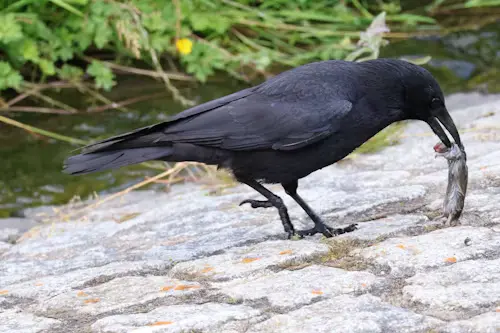
I remember a Tuesday in May about three years ago. I was sitting on my porch with a cup of coffee, watching a pair of robins that had built a nest in my apple tree. They were busy. They were constantly flying back and forth with worms. Then, a shadow crossed the grass. A large American Crow landed on a branch just a few feet from the robin nest. The robins went into a frenzy. They dove at the crow, screaming their alarm calls. But the crow was calm. It waited for a gap in their defense, reached into the nest, and flew away with a small, squirming chick.
It was heartbreaking. I felt like I had watched a crime. But as I sat there, I realized that the crow probably had its own hungry family nearby. This brings up a question many bird lovers ask: do crows eat baby birds? I want to talk about this today because it is a part of nature that is hard to stomach but very real.
Table of Contents
Do crows eat baby birds? The Short Answer
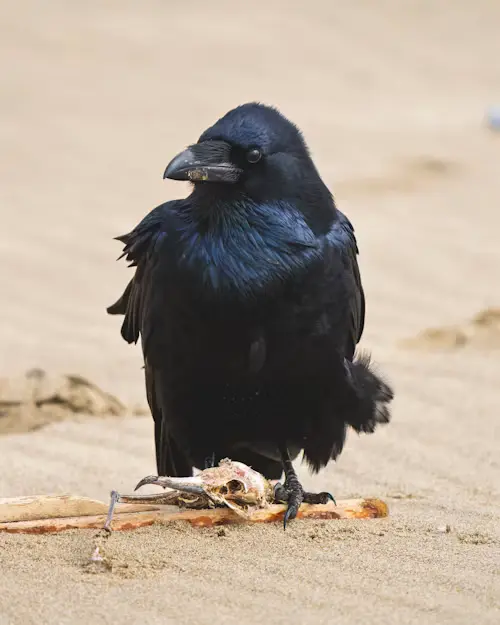
Yes. Crows are omnivores. This means they eat almost anything. Most of their diet consists of grains, seeds, insects, and scraps they find in the trash. But during the spring and summer, they need a lot of protein. Baby birds are a concentrated source of protein and fat. When a crow finds a nest with eggs or chicks, it sees a high-energy meal. It is not being mean or evil. It is just being a bird trying to survive.
Why do crows eat nestlings?
If you have ever seen a crow, you know they are big. They have big bodies and even bigger brains. Powering those brains takes a lot of calories. During the nesting season, adult crows have a massive job. They have to feed themselves and they have to feed their own growing chicks. Crow chicks grow fast. They need animal protein to develop their muscles and feathers. Seeds and berries just aren’t enough for a growing crow.
Crows are also very smart. They watch other birds. They notice when a robin or a sparrow is constantly returning to the same bush. They remember where the nests are. This spatial memory makes them very effective hunters. They don’t just stumble upon nests. They often hunt for them systematically. They check the eaves of houses, the dense parts of shrubs, and the forks of trees.
Understanding crow predation
It is easy to label crows as villains. We like the songbirds. We like the bright red of the cardinal and the sweet song of the chickadee. When a crow takes one of their babies, it feels like an attack on something beautiful. But we have to look at the whole picture. Crow predation is a natural check on bird populations. If every single egg laid by every songbird hatched and survived, our forests and gardens would be overrun. Predators keep things in balance.
The Role of Intelligence
Crows are among the smartest animals on the planet. They use tools. They recognize human faces. This intelligence is a double-edged sword for other birds. Crows can figure out how to get into birdhouses that aren’t properly protected. They can watch a human put out birdseed and realize that where there are feeders, there are often nests nearby. This is why some birders feel a bit conflicted about feeding crows. You might be feeding a crow peanuts today, but that same crow might be eyeing the nest in your porch light tomorrow.
Do crows kill baby birds for fun?
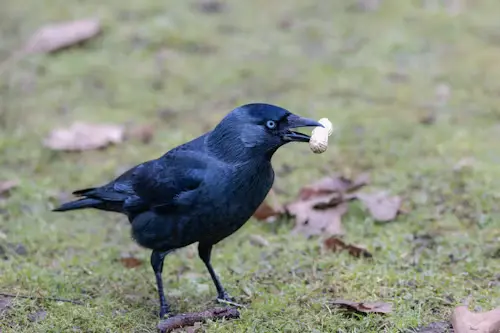
There is a common myth that crows are sadistic. I have heard people say that do crows kill baby birds just to be cruel? The answer is a firm no. Animals in the wild do not have the luxury of wasting energy. Every move a crow makes is calculated for survival. Hunting a nestling is work. It involves dodging the angry parent birds and potentially getting pecked or scratched. A crow only takes that risk because it needs the food. They don’t have a concept of ‘evil’. They have a concept of ‘dinner’.
Birds that eat baby birds (The Surprising List)
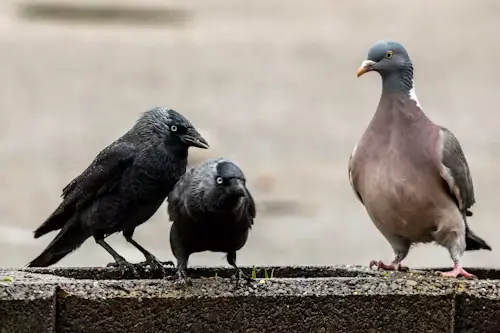
Crows get all the bad press, but they aren’t the only ones raiding nests. Many birds that we think of as ‘friendly’ are also nest predators. Here is a list of some common birds that eat eggs or chicks:
- Blue Jays: These cousins of the crow are just as smart and just as likely to raid a nest.
- Grackles: They are known to take both eggs and small nestlings.
- Hawks and Owls: These are obvious predators, but they often take fledglings that have just left the nest.
- Woodpeckers: Yes, even some woodpeckers will peck into a nest box to get at eggs or chicks.
- House Sparrows: They are very aggressive and will sometimes kill the chicks of other birds to take over a nesting site.
When you look at this list, you see that the crow is just one part of a very busy world of predators. Even squirrels and chipmunks are famous for eating bird eggs. If you want a garden full of birds, you have to realize that you are also inviting a lot of hungry mouths.
The Crow Diet: What else is on the menu?
Crows are the ultimate opportunists. To understand why they take baby birds, you have to see what else they eat. Their diet is incredibly varied. They are like the garbage disposals of the bird world.
| Food Category | Examples | Why they eat it |
|---|---|---|
| Insects | Beetles, grasshoppers, grubs | High protein, easy to find in summer. |
| Grains & Seeds | Corn, wheat, birdseed | Staple energy source, especially in winter. |
| Fruit | Berries, apples, cherries | Provides sugar and hydration. |
| Carrion | Roadkill, dead fish | Effortless calories and fat. |
| Small Mammals | Mice, voles, shrews | A big protein boost when they can catch them. |
| Scraps | Bread, fries, leftovers | Found in urban areas near humans. |
As you can see, baby birds are just a small part of a very large menu. Crows prefer the easiest meal. If there is a bowl of cat food left outside, a crow will take that over a defended nest any day. They are all about efficiency.
How to protect baby birds in your yard
If you are like me and you want to give your backyard songbirds a fighting chance, there are things you can do. You can’t stop nature completely, but you can make your yard a little safer. Protecting baby birds is about making the nests harder to find and harder to reach.
1. Use Predator Guards
If you have birdhouses, install a baffle on the pole. This stops squirrels and snakes, but it doesn’t stop crows. To stop crows, you need a ‘predator guard’ around the entrance hole. This is often a piece of wood or metal that makes the entrance a bit like a tunnel. It prevents a crow from reaching its beak or foot inside to pull out a chick.
2. Plant Dense Shrubbery
Crows hunt by sight. If a nest is tucked deep inside a thorny or very dense bush, a crow is less likely to see it. Planting native shrubs like hawthorn, holly, or dense evergreens provides excellent cover. These plants have thorns or thick leaves that make it physically difficult for a large bird like a crow to get inside.
3. Be Careful with Bird Feeders
I love feeding birds, but feeders can be a problem. They attract a lot of activity. Crows notice where all the small birds are hanging out. If you have a feeder right next to a nesting bush, you are basically putting up a neon sign for predators. Move your feeders away from nesting areas. Also, try to keep the ground under your feeders clean. Spilled grain attracts crows and rodents, which in turn attract bigger predators.
4. Remove Perches from Birdhouses
Standard birdhouses often come with a little wooden perch under the hole. Take it off! Songbirds don’t need that perch to get into the house. But a predator like a crow or a jay can use it as a handle to hang onto while they peek inside. A smooth front is much harder for a large bird to grip.
Creating Bird Nest Safety Zones
The best way to help is to create a habitat that favors the small birds. This means more than just a birdhouse. It means a yard with layers. You want high canopy trees, mid-level shrubs, and thick ground cover. This variety of heights makes it much harder for a crow to scan the whole area at once.
I also recommend providing a water source. A birdbath is great, but make sure it is in the open so the songbirds can see a predator coming. If a birdbath is right next to a thicket, a hawk can sneak up on them. But for nest safety, the goal is always concealment. Hide those nests!
FAQs about: Do Crows Eat Baby Birds
Do crows eat baby birds in the winter?
No, because there are no baby birds in the winter. Most birds nest in the spring and early summer. In the winter, crows switch to eating grains, carrion, and whatever scraps they can find. They are very adaptable and change their diet based on what is available.
Will befriending crows protect my other birds?
This is a common theory on the internet. Some people think that if they feed the crows, the crows will be ‘grateful’ and leave the other birds alone. Unfortunately, birds don’t work that way. While a well-fed crow might be less desperate, it is still a crow. It will still take an easy snack if it sees one. However, having crows around can sometimes keep away even bigger predators like hawks, because crows are very territorial and will chase hawks away.
Do crows eat eggs too?
Yes, crows love eggs. They are easy to carry and full of nutrients. A crow will often poke a hole in an egg and drink the contents, or carry the whole egg away to eat in a quieter spot. This is actually more common than them taking live chicks because it is much quieter and faster.
How many baby birds does a crow eat?
It is hard to say exactly. It depends on the crow and how many nests it finds. Some crows might never raid a nest, while others might become specialists. Research shows that in some areas, crows can have a significant impact on nest success, but in other areas, they are just a minor factor compared to weather and habitat loss.
The Balance of the Backyard
At the end of the day, my apple tree is still there. The robins usually try again if they lose a nest. They are resilient. It took me a long time to stop being angry at the crows. I started to watch them more closely. I saw how they looked after their own. I saw how they played with sticks and how they talked to each other in complex clicks and rattles.
Crows are brilliant, social, and very successful. They are doing exactly what they were designed to do. While it is hard to watch a nest get raided, it is just one chapter in the story of your garden. My advice is to do what you can to protect the nests, but don’t hate the crow for being a crow. They are a part of the wild world that we are lucky enough to have in our own backyards. Keep your feeders clean, keep your birdhouses guarded, and enjoy the show.
Nature is beautiful, even when it is a little bit brutal. If you want to learn more about how birds interact, check out my other guides on bird behavior and how to create a bird-friendly sanctuary in your own space.