The Biggest Flying Bird in the World: A Fascinating Journey Through the Skies

Have you ever looked up at the sky and wondered what it would be like to soar among the clouds like a bird? I certainly have. As a child, I remember lying on my back in the grass, watching birds glide effortlessly overhead, dreaming of the freedom they must feel. But among all the birds that take to the skies, there’s one that stands out as the undisputed champion of size and wingspan. In this article, we’re going to explore the amazing world of the biggest flying bird in the world and its impressive competitors.
Table of Contents
Introduction: The Majesty of Giant Birds
Picture this: you’re standing on a cliff overlooking the ocean, and suddenly, a shadow passes over you. You look up to see a creature with wings that seem to stretch forever, gliding so gracefully that it looks almost unreal. This isn’t a scene from a fantasy movie—it’s the reality of encountering some of the largest flying birds on Earth. These magnificent creatures have captured human imagination for centuries, inspiring myths, legends, and scientific curiosity.
The world of giant flying birds is more diverse and fascinating than you might think. From the ocean-spanning albatrosses to the majestic condors of the Andes, these birds represent the pinnacle of avian evolution. They’ve adapted to harness wind currents, thermals, and their enormous wings to travel incredible distances with minimal effort.
Defining “Biggest”: What Does It Mean?
When we talk about the “biggest flying bird in the world,” we need to clarify what “biggest” means. Are we talking about:
- Wingspan (how far their wings stretch when fully extended)?
- Weight (how heavy they are)?
- Height (how tall they stand)?
- Overall body mass?
Each of these measurements tells us something different about these magnificent creatures. Let’s break it down:
Wingspan vs. Weight vs. Height
Different birds excel in different categories:
- Wingspan champions: Albatrosses and some seabirds
- Weight champions: Condors and some vultures
- Height champions: Cranes and storks
This distinction is important because it helps us appreciate the different evolutionary paths these birds have taken to become masters of the sky.
The Contenders: Largest Flying Bird Species
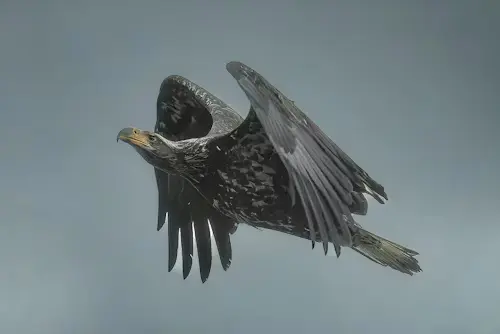
Now, let’s meet the stars of our show—the largest flying bird species that currently grace our planet.
1. The Wandering Albatross: Wingspan King
When it comes to pure wingspan, the wandering albatross (Diomedea exulans) reigns supreme. These incredible seabirds have been recorded with wingspans reaching up to 11 feet 11 inches (3.63 meters)! That’s wider than most cars are long.
Key facts about the wandering albatross:
- Average wingspan: 8.2 to 11.5 feet (2.5 to 3.5 meters)
- Weight: 6.6 to 26.5 pounds (3 to 12 kg)
- Length: 39 to 51 inches (1 to 1.3 meters)
- Lifespan: Up to 50 years
The wandering albatross spends most of its life flying over the Southern Ocean, where it can travel thousands of miles without needing to land. They’re so perfectly adapted to flight that they can sleep while gliding!
2. The Andean Condor: The True “Biggest”
However, when we consider both weight and wingspan together, the title of “biggest flying bird in the world” goes to the Andean condor (Vultur gryphus).
Andean condor specifications:
- Wingspan: Up to 10.5 feet (3.2 meters)
- Weight: 15 to 33 pounds (7 to 15 kg)
- Length: 41 to 51 inches (104 to 130 cm)
- Lifespan: 50 to 75 years in captivity
The Andean condor is truly impressive. Native to the Andes mountains of South America, these birds can soar at altitudes of up to 16,000 feet. They’re scavengers, feeding primarily on carrion, and play a crucial role in their ecosystem by cleaning up dead animals.
3. Royal Albatross Size: The Southern Royal
When discussing royal albatross size, we’re talking about another impressive contender. The southern royal albatross (Diomedea epomophora) is slightly smaller than its wandering cousin but still commands respect.
Southern royal albatross details:
- Wingspan: 9.2 to 11 feet (2.8 to 3.4 meters)
- Weight: 8.8 to 19.8 pounds (4 to 9 kg)
- Length: 39 to 47 inches (99 to 120 cm)
The southern royal albatross breeds primarily on sub-Antarctic islands and spends its life flying over the Southern Ocean, much like the wandering albatross.
The Science Behind the Wingspan
Understanding how these birds achieve such incredible wandering albatross wingspan measurements requires diving into some fascinating biology and physics.
Wing Loading and Aspect Ratio
Two key concepts help explain how giant birds fly:
Wing loading refers to the weight of the bird divided by its wing area. Birds with lower wing loading can fly more easily and at slower speeds.
Aspect ratio is the ratio of wingspan to wing width. High aspect ratio wings (long and narrow) are excellent for gliding and efficient long-distance flight.
Dynamic Soaring: The Albatross Technique
The wandering albatross has perfected a flying technique called “dynamic soaring.” This involves:
- Flying into the wind to gain height
- Turning and gliding downwind, gaining speed
- Using that speed to generate lift and repeat the process
This technique allows them to travel thousands of miles with minimal flapping, making them incredibly energy-efficient travelers.
Other Notable Big Soaring Birds
While the albatrosses and condors get most of the attention, there are other impressive members of the “biggest soaring birds” category.
Great White Pelican
The great white pelican (Pelecanus onocrotalus) is another contender for the title of largest flying bird species:
- Wingspan: Up to 11.2 feet (3.4 meters)
- Weight: 7.7 to 29 pounds (3.5 to 13 kg)
- Distinctive feature: The enormous beak pouch
These birds are found across Europe, Asia, and Africa, often in large flocks near lakes and wetlands.
Dalmatian Pelican
Slightly smaller but equally impressive is the Dalmatian pelican (Pelecanus crispus):
- Wingspan: 9.2 to 11 feet (2.8 to 3.4 meters)
- Weight: 11 to 26 pounds (5 to 12 kg)
- Distinctive feature: Shaggy crest feathers
Marabou Stork
The marabou stork (Leptoptilos crumenifer) is often called the “undertaker bird” due to its shape:
- Wingspan: Up to 10.5 feet (3.2 meters)
- Weight: 11 to 19 pounds (5 to 8.5 kg)
- Height: Up to 5 feet (1.5 meters) when standing
Found in Africa, these birds are scavengers and play an important role in cleaning up carrion.
Historical Giants: What Came Before?

While today’s largest flying birds are impressive, they’re dwarfed by some of the giants that once ruled the skies.
Pelagornis Sandersi: The Ancient Champion
Recent fossil discoveries have revealed that the largest flying bird in the world by wingspan was likely Pelagornis sandersi, which lived about 25 million years ago:
- Estimated wingspan: 20 to 24 feet (6 to 7.3 meters)
- Weight: Estimated at 50 to 90 pounds (23 to 41 kg)
- Lived during: The Oligocene epoch
This ancient seabird had a unique feature: bony “teeth” along its beak, which helped it catch fish and squid.
Argentavis Magnificens
Another prehistoric giant was Argentavis magnificens:
- Wingspan: Estimated at 23 feet (7 meters)
- Weight: Estimated at 150 to 200 pounds (70 to 90 kg)
- Lived during: The Miocene epoch (about 6 million years ago)
Scientists believe Argentavis was primarily a scavenger and likely relied heavily on thermal updrafts to stay aloft.
Conservation Status: Protecting Our Giant Birds
Sadly, many of the world’s largest flying birds face serious threats to their survival.
Threats Facing Giant Birds
Andean Condor:
- Status: Vulnerable
- Threats: Lead poisoning from eating bullet-riddled carcasses, habitat loss, persecution by farmers who mistakenly believe they attack livestock
Wandering Albatross:
- Status: Vulnerable
- Threats: Longline fishing (birds get caught on hooks), plastic pollution, climate change affecting food sources
Royal Albatross:
- Status: Endangered (northern royal), Vulnerable (southern royal)
- Threats: Similar to wandering albatross, plus introduced predators at breeding sites
Conservation Efforts
Organizations worldwide are working to protect these magnificent creatures:
- Tracking programs: Scientists use satellite tags to monitor migration patterns
- Breeding programs: Captive breeding helps boost populations
- Habitat protection: Preserving nesting and feeding areas
- Legislation: Laws to protect birds and their habitats
- Public education: Raising awareness about the importance of these birds
Fascinating Facts About Giant Flying Birds
Let’s dive into some amazing facts that make these birds so special:
Incredible Journeys
- A wandering albatross was recorded flying 3,100 miles (5,000 km) in just 12 days
- Some albatrosses can circumnavigate the globe without landing
- Andean condors can soar for hours without flapping their wings once
Unique Adaptations
- Albatrosses have a special tendon in their wings that locks them in place, allowing for effortless gliding
- Condors have an excellent sense of smell, unusual for birds of prey
- Many large seabirds can drink saltwater thanks to special glands that filter out salt
Long Lives and Slow Reproduction
- Albatrosses don’t breed until they’re 5 to 10 years old
- They typically lay only one egg every 1 to 2 years
- Parent birds take turns incubating the egg for up to 80 days
- Chicks take 5 to 10 months to fledge (leave the nest)
Where to See the Biggest Flying Birds
If you’re inspired to see these magnificent creatures in person, here are some locations worth considering:
For Albatrosses:
- Midway Atoll, Hawaii: Home to Laysan and black-footed albatrosses
- Punta Arenas, Chile: Southern royal albatross breeding colonies
- South Georgia Island: Massive wandering albatross colonies
For Andean Condors:
- Colca Canyon, Peru: Daily condor viewing opportunities
- Maquipucuna Cloud Forest Reserve, Ecuador: Condor release programs
- Aconcagua Provincial Park, Argentina: Natural condor habitat
For Other Large Birds:
- Lake Nakuru, Kenya: Great white and pink-backed pelicans
- Kgalagadi Transfrontier Park, South Africa: Marabou storks and other large raptors
The Importance of Giant Birds in Ecosystems
These magnificent creatures aren’t just impressive to look at—they play vital roles in their ecosystems:
Scavengers and Clean-up Crews
Condors and vultures help prevent the spread of disease by cleaning up carcasses. A single Andean condor can consume up to 3-4 kilograms (6-8 pounds) of meat in one meal!
Seabird Nutrient Cycling
Albatrosses and other seabirds transport nutrients from the ocean to land through their droppings (guano), which fertilizes coastal ecosystems.
Indicators of Ocean Health
The health of albatross populations can indicate the health of marine ecosystems. Declining populations often signal overfishing, pollution, or other ocean problems.
FAQ: ‘The Biggest Flying Bird in the World’
Q: What is the biggest flying bird in the world?
A: The title depends on how you measure “biggest.” The wandering albatross has the largest wingspan (up to 11 feet 11 inches), while the Andean condor is heaviest and has the greatest overall size when considering both weight and wingspan.
Q: Can an albatross really sleep while flying?
A: Yes! Albatrosses have been documented sleeping while gliding. Their efficient flying technique allows them to rest without needing to land.
Q: How do such large birds manage to stay in the air?
A: They use several techniques: thermal soaring (riding rising warm air currents), dynamic soaring (using wind gradients over water), and their wings are specially adapted for gliding with minimal effort.
Q: Are there any flying birds larger than these?
A: Not today. However, prehistoric birds like Pelagornis sandersi and Argentavis magnificens were much larger, with estimated wingspans of 20-24 feet.
Q: Why are so many large flying birds endangered?
A: They face multiple threats including habitat loss, pollution, climate change, and human activities like fishing (which accidentally kills many albatrosses). Their slow reproduction rates make it difficult for populations to recover from declines.
Q: Can I keep a large flying bird as a pet?
A: No. These birds require vast territories, specific diets, and social interactions that cannot be provided in captivity. Many are also protected by law.
Conclusion: Why We Should Care About Giant Birds
The biggest flying bird in the world and its fellow giants represent more than just impressive statistics. They’re living examples of nature’s ingenuity, having evolved to master the skies in ways that continue to amaze scientists and birdwatchers alike.
These birds teach us about:
- Evolutionary adaptation: How life finds ways to thrive in challenging environments
- Ecosystem interconnectedness: How every species plays a role in maintaining balance
- Conservation urgency: How human activities impact even the most remote corners of our planet
- Natural wonder: The sheer beauty and majesty of the natural world
Want to Learn More?
If you’re fascinated by birds and want to dive deeper into the world of our feathered friends, check out these resources:
Have you ever been lucky enough to see one of these magnificent giant birds in person? Share your experience in the comments below—we’d love to hear your stories!