Pet Bird Bites: Best Happy Proven Prevention Tips

Introduction
That sharp nip from your feathered friend can be both surprising and painful. Bird bites are one of the most common challenges bird owners face, and they often leave us wondering where we went wrong. Whether it’s your playful cockatiel or majestic macaw, understanding why pet bird bite is crucial for building a healthier relationship with your avian companion.
In this comprehensive guide, we’ll explore the reasons behind bird bites, how to prevent them effectively, and proven training techniques to modify aggressive behavior. You’ll discover that most biting behavior isn’t about aggression at all – it’s about communication.
Table of Contents
Why Pet Birds Bite
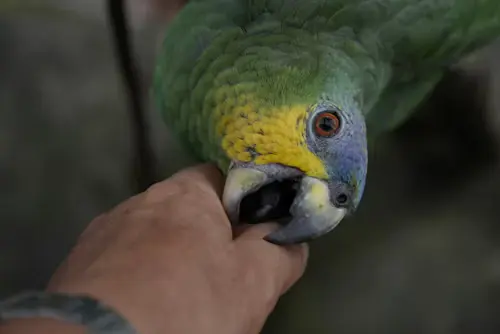
Birds don’t bite without reason. Understanding the underlying causes is the first step toward preventing these painful encounters:
Fear-Based Reactions
When birds feel threatened or scared, their natural defense mechanism is to bite. This is particularly common with recently adopted birds still adjusting to their new environment. A study published in the Avian Welfare Resource Center found that fear-related biting accounts for approximately 60% of reported incidents in pet birds.
Hormonal Aggression
During breeding seasons, both male and female birds may experience increased territorial behavior and aggression. Female birds might become protective of perceived nesting areas, while males may display dominance-based behaviors.
Territorial Behavior
Birds are naturally territorial creatures. Your bird might bite when you reach into their cage, near their favorite perch, or when handling their toys. This protective instinct can be especially strong during certain times of day.
Attention-Seeking or Behavioral Reinforcement
Sometimes, birds learn that biting gets them what they want – whether it’s being put back in their cage, freed from handling, or simply receiving a reaction from their human. This operant conditioning can transform a single incident into a recurring behavior pattern.
Communication of Discomfort
Your bird might be trying to tell you they’re tired, stressed, or simply don’t want to be handled in that moment. Rather than screaming or displaying other obvious signs, some birds rely on biting as their primary communication method.
Stop Bird Biting Behavior
Creating a bite-free environment requires a multifaceted approach:
Recognize Warning Signs
Birds almost always give visual or behavioral signals before biting:
- Pinned eyes (pupils rapidly dilating and contracting)
- Raised feathers
- Leaning away from you
- Mouth opening in a threatening manner
- Body tense and rigid
Respecting these signals can prevent many bites before they occur.
Provide Proper Training and Socialization
Regular, positive interaction helps build trust. Start with short sessions where your bird can approach you on their terms. Reward calm behavior with favorite treats and verbal praise. Clicker training can be particularly effective for reinforcing positive interactions.
Modify the Environment
Ensure your bird has adequate space, enrichment, and appropriate perching options. A bored or stressed bird is more likely to display aggressive behaviors. Consider the placement of your bird’s cage – avoid high-traffic areas that might overwhelm a nervous bird, but don’t isolate them either.
Establish Routine Handling Practices
Consistent, gentle handling helps birds learn what to expect. Use slow movements and speak in calm tones. Never force interaction, as this can damage trust and increase fear-based biting.
Bird Bite Training Tips
Effective training can transform even the most challenging biter:
Positive Reinforcement Techniques
Reward your bird for calm behavior with:
- Favorite treats (healthy options like fruits, vegetables, or commercial bird treats from reputable sources)
- Verbal praise in a soft, soothing voice
- Gentle head scratches if your bird enjoys them
Time-Out Procedures
When biting occurs, immediately and calmly return your bird to their cage for a short time-out (3-5 minutes). This isn’t punishment but rather a clear signal that biting ends playtime.
Clicker Training for Bite Prevention
Clicker training pairs a distinctive sound with positive reinforcement. When your bird approaches without biting, click and reward. This creates a positive association with gentle behavior.
Desensitization Strategies
Gradually expose your bird to handling in non-threatening ways:
- Start by sitting near the cage and reading aloud
- Progress to offering treats through the cage bars
- Move to gentle touching of tail feathers or feet
- Eventually work toward full handling when trust is established
Aggressive Pet Bird Bites
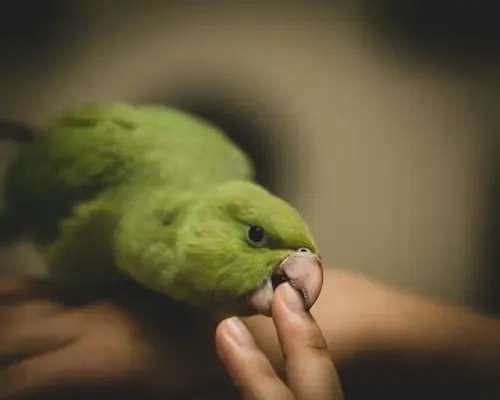
Managing more serious biting behavior requires specialized approaches:
Identifying True Aggression vs. Communication
True aggression involves sustained aggressive posturing, attempts to chase or attack, and biting without evident provocation. This differs from communication-based biting, which typically occurs in specific contexts or has clear warning signs.
When to Seek Professional Help
Consult an avian veterinarian or certified bird behaviorist if:
- Biting results in serious injury
- Your bird displays unprovoked aggression toward multiple family members
- The behavior has escalated despite consistent training efforts
- You feel genuinely at risk when handling your bird
Safety Precautions
For managing aggressive birds, implement these safety protocols:
- Use a perch or towel for handling when necessary
- Wear protective gloves during training sessions
- Never leave aggressive birds unsupervised with children
- Consider temporary housing modifications for safety
Medication Considerations
In severe cases, medication may be necessary to manage behavior. Your avian veterinarian can discuss options like hormone-regulating treatments or anti-anxiety medications as part of a comprehensive behavior modification plan.
Cockatiel Bite Prevention
Cockatiels deserve special attention as one of the most popular pet birds:
Understanding Cockatiel-Specific Behavior
These small parrots are known for:
- “Beak booping” as exploration rather than true biting
- Signaling with slight nips before applying pressure
- Sensitive reactions to sudden movements or loud noises
Age-Related Considerations
Young cockatiels often go through nippy phases as they explore their world. Adolescent birds (6-18 months) may also experience temporary behavioral changes due to hormonal shifts.
Training Techniques Specific to Cockatiels
Cockatiels respond particularly well to:
- Step-up training using treats like millet spray
- Target training with a chopstick or similar object
- Consistent daily handling sessions of just 5-10 minutes
First Aid for Pet Bird Bites
If you experience a bird bite, proper first aid is essential:
For Minor Bites
- Wash thoroughly with soap and warm water
- Apply an antiseptic cream
- Cover with a clean bandage
- Watch for signs of infection
For Deep or Serious Bites
- Control bleeding with firm pressure
- Seek medical attention, especially if:
- Bleeding doesn’t stop after 10 minutes
- The wound is deep or gaping
- You haven’t had a tetanus shot in the past 5 years
- Signs of infection appear (redness, swelling, warmth, pus)
Bird Bite Pain Scale
Understanding the severity of bird bites can help assess the situation:
Redditor Rankings of Most Painful Pet Bird Bites
Based on community surveys, here’s a general pain ranking from bird owners:
| Birds | Pain Level (1-10) | Common Reasons for Biting |
|---|---|---|
| Green Cheek Conure | 6-8 | Fear, Hormonal, Playfulness |
| Lovebird | 5-7 | Territorial, Hormonal |
| Cockatiel | 3-5 | Exploration, Fear |
| African Grey | 7-9 | Communication, Dominance |
| Macaw | 8-10 | Territorial, Protection |
| Cockatoo | 7-9 | Attention, Fear |
FAQ Section Pet Bird Bites
Q: Is it normal for pet birds to bite their owners?
A: While not desirable, occasional nipping is normal, especially during adjustment periods or breeding seasons. However, consistent biting indicates an underlying issue that needs addressing.
Q: What should I do immediately after my bird bites me?
A: Stay calm, avoid reacting strongly (which can reinforce the behavior), and give your bird some space. Clean the bite wound properly and monitor it for infection.
Q: Can bird bites cause serious infections?
A: Yes, bird bites can introduce bacteria that may lead to infection. While typically not as serious as cat bites, they should still be cleaned thoroughly and monitored.
Q: How can I tell if my bird is about to bite?
A: Look for warning signs like pinned eyes, raised feathers, leaning away, mouth opening, or body tension. These signals often precede biting.
Q: Are certain bird species more prone to biting?
A: “Biting tendency” varies more by individual personality and training than by species, though larger birds can inflict more damage. Consistent positive reinforcement helps all species.
Conclusion
Bird bites don’t have to be an inevitable part of pet ownership. By understanding the reasons behind biting behavior, recognizing warning signs, and implementing consistent training techniques, you can dramatically reduce bite incidents while strengthening your bond with your feathered companion.
Remember that patience is key. Birds communicate differently than humans or other pets, and what appears as aggression is often misplaced fear, hormonal behavior, or communication attempts. With the right approach, even birds with established biting habits can learn more appropriate ways to express themselves.
Have you experienced challenges with your pet bird’s biting behavior? What techniques have worked for you? Share your experiences in the comments below – your insights might help fellow bird owners navigate similar challenges with their feathered friends!