Flocking Behavior in Birds: Ultimate Survival Hack

Have you ever paused to watch a murmuration of starlings twist and turn across the evening sky like a living, breathing cloud? Or stood in awe as a massive flock of geese passed overhead in a perfect V formation? These breathtaking displays are more than just nature’s fireworks—they’re the result of one of the most fascinating phenomena in the animal kingdom: flocking behavior in birds.
Whether you’re a backyard birdwatcher, a pet parrot owner, or simply someone who appreciates nature’s wonders, understanding flocking behavior can deepen your appreciation for these feathered friends. In this comprehensive guide, we’ll explore everything from the science behind synchronized flight to how this behavior affects your pet birds at home.
Table of Contents
The Science Behind Flocking Behavior in Birds
At first glance, a flock of birds might seem like a chaotic mass of feathers and wings. But beneath the surface, there’s an intricate system of rules and responses that govern every movement. Scientists have spent decades studying this phenomenon, and what they’ve discovered is both elegant and surprising.
Three Simple Rules for Complex Behavior
Research has shown that flocking behavior in birds follows just three basic rules, first described by computer scientist Craig Reynolds in his famous “boids” simulation:
- Separation: Avoid crowding local flockmates
- Alignment: Steer toward the average heading of local flockmates
- Cohesion: Steer to move toward the average position of local flockmates
These rules might sound simple, but when applied by hundreds or thousands of individuals simultaneously, they create the complex, fluid patterns we see in nature. Each bird only needs to pay attention to its immediate neighbors—typically the 6-7 birds closest to it. From this local interaction emerges global coordination.
Recent studies using high-speed cameras and computer modeling have revealed that birds in a flock can react to changes in their neighbors’ movements in just 0.2 seconds. This lightning-fast response time allows information to travel through a flock almost instantaneously, creating the illusion of a single, coordinated organism.
The Physics of Flight Formation
When you see birds flying in a V formation, you’re witnessing aerodynamics at work. Each bird positions itself to take advantage of the upwash created by the wings of the bird in front of it. This upwash provides additional lift, reducing the energy required for flight by up to 20-30%.
The lead position in a V formation is the most energetically demanding, so birds take turns at the front. This cooperative behavior ensures that no single individual bears the brunt of the workload for too long. Researchers have found that birds in formation can fly up to 70% farther than they could alone, making this an essential adaptation for migration.
Why Birds Flock Together: The Evolutionary Advantages
Understanding why birds flock together requires looking at the fundamental challenges birds face in the wild. From finding food to avoiding predators, flocking provides multiple survival benefits that have made it a successful strategy across countless species.
Predator Avoidance: Safety in Numbers
Perhaps the most significant advantage of flocking is protection from predators. When a bird is alone, it represents 100% of a predator’s potential meal. But when that same bird is part of a flock of 100, its individual risk drops to just 1%.
This concept, known as the “dilution effect,” means that even if a predator attacks, each individual bird has a much better chance of escaping. Additionally, large flocks can confuse predators through their coordinated movements. A swirling mass of birds is much harder to target than a single individual.
Some species take this a step further with collective defense behaviors. For example, when threatened, certain birds will form tight defensive formations or even mob predators together, making themselves appear larger and more threatening.
Foraging Efficiency: Many Eyes Are Better Than Two
Flocking also dramatically improves birds’ ability to find food. With more eyes scanning the environment, flocks can locate food sources more quickly and efficiently than solitary birds. Once one bird discovers food, others can quickly follow, creating a positive feedback loop that benefits the entire group.
This “information sharing” is particularly important for species that rely on patchy or unpredictable food sources. A lone bird might spend hours searching for a productive feeding area, while a flock can cover much more ground and share discoveries rapidly.
Navigation and Migration: Following the Flock
For migratory species, flocking provides crucial navigation benefits. Young birds can learn migration routes by following experienced individuals, and the collective knowledge of the group helps ensure that flocks find the best stopover sites and feeding areas along their journey.
Some research suggests that birds in flocks may also be better at reading environmental cues like wind patterns, magnetic fields, and celestial navigation. The combined sensory input from many individuals might provide a more accurate picture of their location and direction than any single bird could achieve alone.
Bird Flocking Patterns: From Simple to Spectacular
The world of bird flocking patterns is incredibly diverse, ranging from simple aggregations to some of nature’s most spectacular displays. Each pattern serves a specific purpose and reflects the unique needs and capabilities of different species.
Basic Flocking Patterns
Not all flocking behavior is dramatic. Many birds form simple aggregations when feeding or resting. These loose groups provide basic benefits like shared vigilance against predators while allowing individuals to maintain some independence.
Examples include:
- Feeding flocks: Birds gather in areas with abundant food, such as seed-eating finches at a bird feeder
- Roosting flocks: Birds gather to sleep together for warmth and protection, like starlings in urban areas
- Mixed-species flocks: Different bird species forage together, each contributing different skills or warning systems
Complex Flight Formations
Some of the most impressive bird flocking patterns occur during flight. These formations serve multiple purposes, from aerodynamic efficiency to predator confusion.
V Formations
Perhaps the most recognizable flocking pattern, V formations are commonly seen in waterfowl like geese, swans, and pelicans. The V shape allows each bird to benefit from the upwash of the bird ahead while maintaining visual contact with the group.
Jagged Lines and Diagonal Formations
Some species, like cormorants and ibises, fly in diagonal or jagged lines. These formations still provide aerodynamic benefits while allowing for more flexibility in flight paths and better communication among individuals.
Murmurations
Perhaps the most spectacular flocking displays are murmurations—massive, fluid movements of starlings or other small birds. These displays can involve thousands of individuals moving in perfect synchrony, creating shapes that seem to pulse and flow across the sky.
Murmurations serve multiple purposes:
- Predator confusion: The complex, changing patterns make it nearly impossible for predators to target a single bird
- Information sharing: Birds can communicate the location of safe roosting sites
- Social bonding: These displays may strengthen group cohesion and social relationships
Ground-Based Flocking Patterns
Flocking behavior isn’t limited to flight. Many birds exhibit complex ground-based patterns that serve important social and survival functions.
For example, some shorebirds form tight defensive formations when threatened, huddling together to present a unified front to predators. Others create loose foraging patterns that maximize coverage of feeding areas while maintaining group cohesion.
Finch Flocking Behavior: Small Birds, Big Lessons
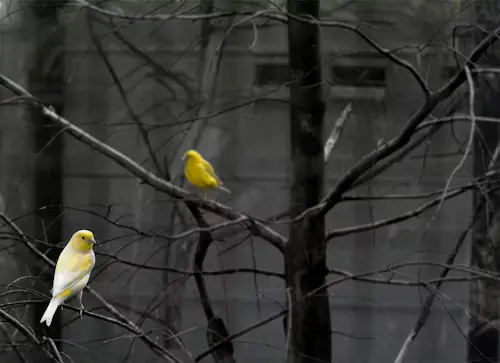
Finch flocking behavior offers some of the best examples of how even small, seemingly simple birds can exhibit sophisticated social dynamics. These tiny birds demonstrate that flocking isn’t just for large, highly intelligent species—it’s a fundamental survival strategy across the avian world.
Social Structure in Finch Flocks
Finches typically form loose, flexible flocks that can change size and composition throughout the day. These flocks often have a loose hierarchy based on factors like age, sex, and individual personality.
Interestingly, research has shown that finches can recognize individual members of their flock and form social bonds that persist over time. This social recognition allows for more complex interactions and cooperation than might be expected in such small-brained birds.
Communication in Finch Flocks
Finches use a variety of vocalizations and body language to maintain flock cohesion. Their constant chirping serves multiple purposes:
- Location calls: Help individuals keep track of each other’s positions
- Alarm calls: Warn the flock of potential danger
- Food calls: Signal the discovery of food sources
- Social bonding: Maintain group cohesion and strengthen social relationships
These vocalizations are often species-specific and can convey detailed information about the type and severity of threats, the quality of food sources, and the location of the caller.
Seasonal Changes in Finch Flocking
Finch flocking behavior changes dramatically with the seasons. During breeding season, many finch species become more territorial and less social as they focus on mating and raising young. However, outside of breeding season, they form larger, more cohesive flocks that provide better protection and foraging opportunities.
This seasonal flexibility allows finches to balance the benefits of social living with the demands of reproduction, demonstrating the adaptability of flocking behavior.
Parrot Flock Dynamics: Intelligence and Social Complexity
When it comes to parrot flock dynamics, we’re dealing with some of the most intelligent and socially complex birds on the planet. Parrots don’t just flock—they form intricate social networks that rival those of primates in their complexity.
Complex Social Hierarchies
Parrot flocks typically have well-defined social hierarchies that influence everything from feeding order to mating opportunities. These hierarchies aren’t always based on physical strength—social intelligence, alliances, and individual personalities all play important roles.
Studies of wild parrot flocks have revealed that these birds form long-term friendships, engage in cooperative behaviors, and even show empathy toward flock members in distress. This level of social sophistication requires advanced cognitive abilities and strong communication skills.
Vocal Learning and Communication
One of the most remarkable aspects of parrot flock dynamics is their sophisticated communication system. Parrots are among the few animals capable of vocal learning—the ability to learn and modify vocalizations throughout life.
In the wild, parrots develop “contact calls” that are unique to their individual flock. These calls serve as a sort of vocal fingerprint, allowing birds to identify flock members and maintain social bonds even when separated. Some research suggests that parrots can even recognize and respond to the individual “names” of other flock members.
Cooperative Behaviors
Parrot flocks exhibit numerous cooperative behaviors that go beyond simple flocking:
- Allopreening: Mutual grooming that strengthens social bonds and helps maintain feather condition
- Food sharing: Dominant individuals may share food with subordinates, reinforcing social relationships
- Collective defense: Flocks may mob predators together or use coordinated alarm calls to warn of danger
- Babysitting: Non-breeding individuals may help care for young, gaining parenting experience and strengthening social bonds
Mating and Reproduction in Parrot Flocks
Even parrot mating behaviors are influenced by flock dynamics. Many parrot species form long-term monogamous pairs, but these pairs remain integrated into the larger flock structure. This creates a complex social environment where pair bonds must be balanced with broader social relationships.
The presence of the flock can influence breeding success, with some studies showing that isolated pairs may have lower reproductive rates than those integrated into larger social groups.
Seasonal Bird Flocking: Nature’s Calendar
Seasonal bird flocking patterns reflect the changing demands of survival throughout the year. As conditions change, so do the benefits and challenges of social living, leading to dramatic shifts in flock size, composition, and behavior.
Spring: The Breakup of Flocks
As spring arrives, many bird species that spent the winter in large flocks begin to disperse. This breakup serves several important purposes:
- Breeding territory establishment: Birds need space to establish territories and attract mates
- Resource competition reduction:分散 reduces competition for nesting sites and food resources needed for raising young
- Parental care focus: Raising young requires intense parental investment that’s difficult to balance with flock living
However, even during breeding season, some degree of social interaction often remains. Many species form loose aggregations of nesting pairs, allowing for information sharing and collective defense while maintaining breeding territories.
Summer: Family Groups and Juvenile Flocks
During summer, flocking behavior shifts to accommodate the needs of raising young. Many species form family groups consisting of parents and their offspring. These groups provide several advantages:
- Protection for juveniles: Young birds are vulnerable and benefit from the protection of experienced adults
- Social learning: Juveniles learn essential skills by observing and interacting with adults
- Foraging efficiency: Family groups can cover more ground and share information about food sources
As the breeding season progresses, these family groups may begin to coalesce into larger juvenile flocks, particularly among species that don’t breed annually or have multiple broods.
Fall: The Great Assembly
Fall marks the beginning of the most dramatic changes in seasonal bird flocking. As days shorten and food becomes scarcer, birds begin forming the large flocks that will see them through the winter months.
This assembly process serves multiple purposes:
- Migratory preparation: Many species form pre-migratory flocks to prepare for long journeys
- Information sharing: Flocks can share knowledge about food sources and safe roosting sites
- Social bonding: Birds reestablish social relationships that will be important during the winter months
For some species, this period also involves the formation of mixed-species flocks, where different bird species forage together. These mixed flocks can be highly beneficial, as different species often have complementary foraging strategies and predator detection abilities.
Winter: Survival Through Unity
Winter is when seasonal bird flocking reaches its peak. The challenges of cold weather, limited food, and increased predation pressure make social living essential for many species.
Winter flocks provide several critical survival benefits:
- Thermal regulation: Birds can huddle together for warmth, reducing heat loss and energy expenditure
- Foraging efficiency: More eyes mean better detection of food sources and predators
- Information networks: Flocks create networks for sharing information about food sources and safe areas
- Social support: Social interaction may help reduce stress and improve overall health
The size and composition of winter flocks can vary dramatically depending on species, habitat, and food availability. Some species form massive flocks numbering in the thousands, while others maintain smaller, more stable groups.
Benefits of Bird Flocks: More Than Just Safety
While predator avoidance is often cited as the primary benefit of benefits of bird flocks, the advantages of social living extend far beyond simple protection. Flocking provides a wide range of benefits that contribute to individual fitness and species survival.
Enhanced Foraging Success
One of the most significant benefits of bird flocks is improved foraging efficiency. When birds forage in groups, they can:
- Cover more ground: Multiple individuals can search a larger area simultaneously
- Share information: Successful foragers can lead others to productive food sources
- Detect food more efficiently: More eyes and ears increase the chances of finding food
- Access difficult food sources: Some food sources may require cooperative efforts to access or exploit
Studies have shown that birds in flocks often have higher foraging success rates than solitary individuals, particularly when food is patchy or difficult to find.
Improved Navigation and Migration
For migratory species, flocking provides crucial navigation benefits. The collective knowledge of a flock can be far greater than that of any individual bird. This “collective intelligence” helps flocks:
- Find optimal migration routes: Experienced individuals can guide younger or less experienced birds
- Locate stopover sites: Flocks can share information about good resting and feeding areas
- Navigate challenging conditions: Group decision-making may lead to better choices in difficult weather or terrain
- Reduce navigation errors: The presence of multiple individuals helps prevent straying from the correct path
Social Learning and Information Transfer
Flocks serve as important centers for social learning and information transfer. Young birds can learn essential skills by observing and interacting with more experienced individuals. This social learning can include:
- Foraging techniques: How to find and process different food sources
- Predator recognition: Which threats to avoid and how to respond to them
- Social behaviors: Appropriate interactions with other birds
- Migratory routes: Knowledge of seasonal movements and important locations
Genetic Benefits
Surprisingly, benefits of bird flocks can even extend to genetic level advantages. Some research suggests that social living may:
- Increase genetic diversity: Larger populations allow for greater genetic mixing
- Reduce inbreeding: Movement between flocks can prevent genetic isolation
- Promote beneficial mutations: Larger populations provide more opportunities for advantageous genetic variations to arise
Stress Reduction and Health Benefits
Recent research has begun to uncover potential health benefits of social living in birds. Social interaction may:
- Reduce stress levels: Social support can help buffer against environmental stressors
- Improve immune function: Lower stress levels may lead to better immune responses
- Increase longevity: Reduced stress and improved health may contribute to longer lifespans
- Enhance reproductive success: Healthier, less stressed birds may have better breeding outcomes
Flocking in Pet Birds: Understanding Your Companion’s Social Needs
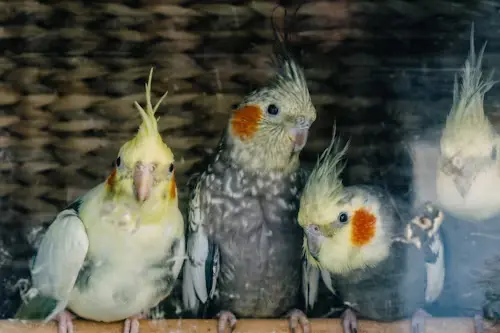
Understanding flocking in pet birds is crucial for providing proper care and ensuring your feathered friend’s happiness and well-being. Most pet birds are highly social species that have evolved to live in complex social groups, and their needs don’t disappear just because they’re living in your home.
The Social Nature of Pet Birds
Many popular pet bird species, including parrots, finches, and canaries, are naturally social animals that thrive on interaction with others of their kind. In the wild, these birds spend most of their time in the company of flock members, engaging in activities like foraging, preening, and socializing.
When kept as single pets, these birds may experience loneliness, stress, and behavioral problems. Understanding their natural social needs is the first step toward providing appropriate care.
Signs of Social Deprivation in Pet Birds
Birds that aren’t getting adequate social interaction may exhibit various behavioral and physical signs, including:
- Feather plucking: Often a sign of stress or boredom
- Excessive vocalization: Calling out for contact or attention
- Aggression: Frustration from lack of appropriate social outlets
- Depression: Lethargy, loss of appetite, or disinterest in surroundings
- Repetitive behaviors: Stereotypical movements or actions
If you notice any of these signs in your pet bird, it may be a signal that their social needs aren’t being met.
Meeting Your Bird’s Social Needs
There are several ways to address the social needs of flocking in pet birds:
Human Interaction
For many pet birds, their human caregivers become their primary social partners. Regular, positive interaction can help fulfill your bird’s need for companionship. This includes:
- Quality time: Spending time with your bird daily, even if just for a few minutes
- Training and enrichment: Teaching tricks and providing mental stimulation
- Gentle handling: Appropriate physical contact and petting
- Talking and singing: Vocal interaction that mimics natural flock communication
Bird Companionship
In some cases, providing a bird companion may be the best way to meet your pet’s social needs. However, this decision should be made carefully, considering factors like:
- Species compatibility: Not all species get along well together
- Personality compatibility: Individual birds have different temperaments
- Cage size and setup: Adequate space for multiple birds is essential
- Financial and time commitment: Two birds require twice the care and resources
Environmental Enrichment
Creating a stimulating environment can help address some of your bird’s social needs:
- Mirrors: Can provide the illusion of companionship for some birds
- Bird-safe toys: Provide mental stimulation and outlets for natural behaviors
- Audio enrichment: Bird sounds or music can provide auditory stimulation
- Window access: Allows birds to observe outdoor bird activity
Common Mistakes in Meeting Social Needs
Well-meaning bird owners often make mistakes when trying to address their pet’s social needs:
- Over-handling: Too much physical contact can be stressful for some birds
- Inconsistent interaction: Irregular attention can be more stressful than no attention at all
- Ignoring species-specific needs: Different species have different social requirements
- Assuming all birds want the same level of interaction: Individual personalities vary greatly
FAQ: Flocking Behavior in Birds
Q: Why do birds fly in a V formation?
A: Birds fly in V formations primarily for aerodynamic efficiency. Each bird benefits from the upwash created by the wings of the bird ahead, reducing energy expenditure by up to 30%. The formation also allows for better communication and visual contact among flock members.
Q: How do birds avoid colliding in large flocks?
A: Birds use a combination of visual cues, rapid reflexes, and the three fundamental rules of flocking behavior: separation (avoiding crowding), alignment (matching direction with neighbors), and cohesion (staying with the group). They can react to changes in their neighbors’ movements in just 0.2 seconds.
Q: Do all birds flock together?
A: No, not all birds exhibit flocking behavior. Some species are naturally solitary, while others only form flocks during certain times of year or for specific purposes like migration or roosting.
Q: Can pet birds form flocks with humans?
A: In a sense, yes. Many pet birds will form strong social bonds with their human caregivers, treating them as flock members. However, this requires consistent, positive interaction and understanding of the bird’s natural behaviors and needs.
Q: How can I tell if my pet bird is lonely?
A: Signs of loneliness in pet birds include excessive vocalization, feather plucking, aggression, depression, and repetitive behaviors. Increased attention to mirrors or attempts to interact with reflections may also indicate a need for social contact.
Q: Is it better to have one or two pet birds?
A: This depends on the species, individual personalities, and your ability to provide care. Some birds thrive with a companion, while others may do well with sufficient human interaction. Research your specific species’ needs and consider your lifestyle before making this decision.
Q: How do birds communicate in flocks?
A: Birds use a variety of communication methods in flocks, including vocalizations (calls, songs), body language (postures, movements), and visual signals. Different calls can convey information about food, predators, location, and social status.
Conclusion: The Enduring Wonder of Flocking Behavior
The study of flocking behavior in birds reveals one of nature’s most remarkable examples of collective intelligence and cooperation. From the simple rules that govern individual movements to the complex social dynamics of parrot flocks, this behavior demonstrates the power of unity in the face of life’s challenges.
For bird owners, this knowledge is particularly valuable. By understanding your pet bird’s natural social needs and behaviors, you can provide better care and create a happier, healthier environment for your feathered companion.
The next time you see birds flying together in perfect synchrony, take a moment to appreciate the millions of years of evolution that have shaped this behavior. Each bird in that flock is following ancient instincts that have ensured the survival of their species, creating a living testament to the power of cooperation and community.