Best Bird Food for Winter: Proven Joyful Energy Foods

Introduction: Why Winter Bird Feeding Matters
There’s something deeply comforting about watching birds flit from tree to tree in your backyard during the coldest months of the year. As winter approaches, many of us start thinking about how to help our feathered friends survive the harsh conditions. The truth is, birds face incredible challenges during winter – finding food becomes a daily struggle, and the energy demands of staying warm can be overwhelming.
This article will guide you through everything you need to know about the best bird food for winter to keep your local birds healthy, energetic, and thriving through the coldest months. We’ll cover everything from winter bird suet balls to cold weather bird energy foods, fat balls for birds, and winter sunflower seeds.
Table of Contents
Understanding Winter Bird Nutrition
What Birds Need in Winter
When temperatures drop, birds need significantly more energy just to survive. Unlike humans, birds can’t simply put on a sweater or turn up the thermostat. They must generate their own body heat through metabolism, which requires a constant supply of high-calorie foods.
Key nutritional requirements for winter birds:
- High-fat content: Fat provides more than twice the energy of carbohydrates or proteins
- Easy-to-digest foods: Birds need quick energy sources they can process efficiently
- Protein: Essential for maintaining muscle mass and overall health
- Moisture: Even in winter, birds need access to water for proper digestion
Why Natural Food Sources Become Scarce
During winter, many of the natural food sources that birds rely on become unavailable:
- Insects and their larvae (a primary protein source) are dormant or hibernating
- Many seeds and berries have been consumed or are buried under snow
- Tree sap flow slows dramatically
- The ground is often frozen, making it impossible to forage for worms and grubs
This scarcity is why supplemental feeding becomes so important. However, it’s crucial to provide the right types of food that match what birds would naturally seek out.
The Top Winter Bird Foods
1. Winter Bird Suet Balls: High-Energy Fat Sources
Suet is one of the most important foods you can offer birds during winter. It’s essentially rendered beef fat that provides concentrated energy in a form that’s easy for birds to digest.
Why suet is essential for winter survival:
- High caloric density: Fat contains 9 calories per gram compared to 4 calories per gram for protein or carbohydrates
- Quick energy: Birds can metabolize fat rapidly to generate body heat
- Weather resistance: Unlike seed mixes, suet doesn’t spoil easily in cold weather
Types of suet products:
- Plain suet cakes: Basic rendered fat in molded cakes
- Suet balls: Round balls of suet that fit into specialized feeders
- Flavored suet: Mixed with seeds, fruits, or insects for added nutrition
- No-melt suet: Formulated to withstand warmer winter days without dripping
Birds that love suet:
- Woodpeckers
- Nuthatches
- Chickadees
- Titmice
- Wrens
- Starlings
- Bluebirds (especially during migration)
When choosing suet products, look for those made with high-quality ingredients and minimal fillers. Some commercial suet cakes contain large amounts of milo or other inexpensive grains that many birds simply won’t eat.
2. Cold Weather Bird Energy Food: Specially Formulated Blends
Many bird food manufacturers now offer “winter energy” or “cold weather” blends specifically designed to meet the nutritional demands of winter survival.
Characteristics of good winter energy blends:
- High-fat ingredients: Peanuts, sunflower seeds, and tree nuts
- Protein sources: Mealworms, egg fragments, or fish meal
- Quick-energy carbs: Corn, millet, and other grains
- Added vitamins and minerals: For overall health and immune support
Making your own cold weather blend:
You can create an excellent homemade winter energy mix by combining:
- 3 parts black oil sunflower seeds
- 2 parts cracked corn
- 1 part shelled peanuts
- 1 part safflower seeds
- 1 part nyjer (thistle) seeds
- 1/2 part dried mealworms
Mix thoroughly and store in an airtight container in a cool, dry place. This blend provides a good balance of fats, proteins, and carbohydrates that will appeal to a wide variety of bird species.
3. Fat Balls for Birds: Portable Energy Packets
Fat balls represent one of the most efficient ways to provide concentrated energy to birds. They’re essentially bite-sized portions of suet mixed with seeds, grains, or other nutritious ingredients.
Benefits of fat balls:
- Convenient feeding: Easy to handle and place in various feeder types
- Reduced waste: Birds tend to consume fat balls more completely than loose seed mixes
- Weather resistant: Won’t spoil or mold in damp conditions
- Versatile: Can be hung from trees, placed on platforms, or used in specialized feeders
Making fat balls at home:
Creating your own fat balls is simple and cost-effective:
Ingredients:
- 2 cups rendered beef suet (or lard)
- 2 cups mixed birdseed
- 1 cup rolled oats
- 1/2 cup peanut butter (unsalted, no added sugar)
- 1/2 cup dried fruit pieces (optional)
Instructions:
- Melt the suet gently in a double boiler
- Remove from heat and let cool slightly
- Mix in the remaining ingredients
- Spoon the mixture into silicone molds or onto parchment paper
- Refrigerate until firm
- Store in the freezer until ready to use
Safety considerations:
- Never use suet or fat balls containing ingredients toxic to birds (such as chocolate, avocado, or excessive salt)
- Avoid using rancid fats or oils
- Make sure any added ingredients are bird-safe
4. Winter Sunflower Seeds: The All-Season Favorite
Sunflower seeds remain one of the most popular choices for bird feeding year-round, but they become especially important during winter months.
Why sunflower seeds excel in winter:
- High oil content: Black oil sunflower seeds contain up to 40% fat
- Easy to cache: Birds can store sunflower seeds for later consumption
- Wide appeal: Attracts more bird species than almost any other food
- Weather resistant: Seeds remain viable even when exposed to moisture
Types of sunflower seeds:
Black Oil Sunflower Seeds:
These are the most popular choice for winter feeding. They have thin shells that most birds can easily crack open, and the high oil content provides excellent energy.
Striped Sunflower Seeds:
Larger with thicker shells, these are better suited for larger birds like jays and cardinals. They’re slightly lower in fat content but still provide good nutrition.
Sunflower Hearts/Chips:
These are hulled sunflower seeds that provide convenience and reduce mess. While more expensive, they’re ideal for areas where you want to minimize shell debris.
Nutritional benefits:
- Rich in healthy fats and proteins
- Contains vitamins E and B6
- Provides essential minerals like magnesium and selenium
- High in antioxidants
For more information on bird seed options, check out our comprehensive bird seed and food guide.
Specialized Winter Feeding Strategies
Platform Feeding for Ground-Feeding Birds
Not all birds feed at hanging feeders. Many species prefer to forage on the ground or on platform feeders. During winter, providing food at multiple levels becomes even more important.
Ground-feeding birds to consider:
- Sparrows
- Juncos
- Doves
- Pheasants
- Turkeys
- Some species of grosbeaks
Platform feeding tips:
- Use raised platforms to keep food dry and accessible
- Provide shelter nearby for protection from predators
- Offer cracked corn, millet, and chopped nuts
- Clean platforms regularly to prevent mold and disease
Nyjer (Thistle) Seeds: High-Calorie Options for Finches
Nyjer seeds have become increasingly popular for winter feeding, especially among finch enthusiasts. These tiny black seeds are high in oil content and provide excellent energy for small birds.
Benefits of nyjer seeds:
- Extremely high in calories
- Attracts goldfinches, siskins, and redpolls
- Less attractive to unwanted species like house sparrows
- Can be fed in specialized tube feeders
Feeding nyjer effectively:
- Use tube feeders with small ports to prevent seed from blowing away
- Buy fresh nyjer regularly, as it can become rancid
- Consider mixing with other small seeds to reduce cost
Learn more about specialized seed options in our article on whether birds can eat chia seeds.
Mealworms: Protein-Packed Winter Nutrition
While mealworms might seem like a summer food, they can be incredibly valuable during winter months, especially during migration periods and for insect-eating species that remain active.
Benefits of offering mealworms in winter:
- High protein content supports muscle maintenance
- Provides essential fats and vitamins
- Attracts a wide variety of bird species
- Can be offered live, dried, or rehydrated
Birds that benefit from mealworms:
- Bluebirds
- Robins
- Wrens
- Thrushes
- Woodpeckers
- Chickadees
Feeding Stations and Equipment for Winter
Choosing the Right Feeders
The type of feeder you use can significantly impact which birds visit and how efficiently they can access food.
Suet feeders:
- Simple wire cages work well for most situations
- Consider upside-down feeders to discourage starlings
- Make sure drainage holes are present to prevent water accumulation
Tube feeders:
- Excellent for sunflower seeds and nyjer
- Protect food from weather
- Multiple feeding ports accommodate several birds
- Baffles can help deter larger, unwanted birds
Platform feeders:
- Good for ground-feeding species
- Easy to clean and refill
- Can be adapted with roofs for weather protection
Hopper feeders:
- Mimic natural feeding situations
- Can hold large quantities of food
- Attract a wide variety of species
Placement and Maintenance
Proper feeder placement and maintenance become even more critical during winter months.
Placement guidelines:
- Locate feeders near natural cover but not too close (to prevent predator ambushes)
- Face feeders away from prevailing winds
- Ensure easy viewing for monitoring bird activity
- Provide multiple feeding stations to reduce competition
Maintenance tips:
- Clean feeders regularly with a 10% bleach solution
- Remove accumulated seed hulls and debris
- Check for mold or spoilage, especially in damp conditions
- Ensure feeders remain functional despite ice and snow
Regional Considerations for Winter Feeding
Cold Climate Strategies
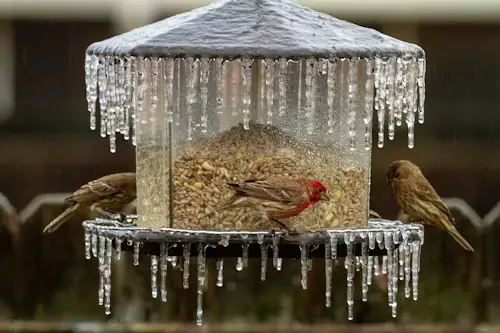
In regions with severe winters, additional considerations become necessary:
- Heated feeders: Prevent food from freezing
- Sheltered locations: Protect feeders from heavy snow and wind
- Increased quantities: Birds need more food in extreme cold
- Water sources: Heated birdbaths become essential
Mild Climate Considerations
Even in areas with mild winters, supplemental feeding provides benefits:
- Migration support: Helps birds during their journeys
- Breeding preparation: Supports early breeding species
- Diverse offerings: Can include more variety in food choices
Common Winter Feeding Mistakes to Avoid
1. Offering Inappropriate Foods
Not all human foods are safe for birds, and some common “bird foods” aren’t suitable for winter feeding:
Foods to avoid:
- Bread and baked goods (low nutritional value)
- Salty or seasoned items
- Spoiled or moldy foods
- Chocolate, avocado, or caffeine (toxic to birds)
2. Inconsistent Feeding
Once you start feeding birds, try to maintain a consistent schedule. Birds come to rely on feeders as part of their daily foraging routine, and suddenly removing this food source can be harmful, especially during severe weather.
3. Poor Hygiene
Winter conditions can lead to the spread of disease if feeders aren’t properly maintained:
- Clean feeders at least monthly
- Remove accumulated waste and old food
- Provide adequate spacing between feeding stations
- Monitor birds for signs of illness
4. Ignoring Water Needs
Even in winter, birds need access to fresh water for drinking and bathing. Consider investing in a heated birdbath or regularly providing fresh water.
Creating a Winter Bird-Friendly Environment
Natural Food Sources
While supplemental feeding is valuable, enhancing natural food sources provides additional benefits:
- Plant native species that produce winter berries
- Leave seed heads on flowers and grasses
- Create brush piles for shelter and insect habitat
- Maintain dead trees (if safe) for cavity-nesting birds and insect populations
Shelter and Protection
Birds need more than just food to survive winter:
- Evergreen trees and shrubs provide wind protection and cover
- Dense thickets offer escape routes from predators
- Roosting boxes provide shelter during extreme cold
- Snow-free areas allow ground-feeding birds to access food
Seasonal Feeding Schedule
Pre-Winter Preparation (October-November)
- Begin establishing regular feeding routines
- Clean and prepare feeders for winter use
- Provide high-energy foods to help birds build fat reserves
- Offer nesting materials for roosting boxes
Peak Winter (December-February)
- Maintain consistent feeding schedules
- Increase quantities during cold snaps
- Focus on high-fat, high-calorie foods
- Provide emergency food during severe weather
Late Winter/Early Spring (March-April)
- Continue feeding as natural foods remain scarce
- Add protein sources for breeding birds
- Gradually reduce feeding as natural foods become available
- Clean and store equipment for spring
Frequently Asked Questions
What is the best bird food for winter?
The best bird food for winter typically includes a combination of high-fat foods like suet, black oil sunflower seeds, and mixed seed blends with added nuts and dried fruits. The key is providing concentrated energy sources that birds can easily digest and convert to body heat.
When should I start feeding winter bird food?
Begin establishing feeding routines in early fall, around October in most regions. This gives birds time to discover your feeders and incorporate them into their daily foraging patterns before natural food sources become severely limited.
How often should I refill winter bird feeders?
Refill feeders as needed, but aim to maintain consistent food availability. During severe weather, you may need to refill daily. Always check that food hasn’t become damp or moldy before refilling.
Are there any foods I should avoid feeding birds in winter?
Avoid offering bread, crackers, or other low-nutrition human foods. Also avoid salty, seasoned, or spoiled items. Stick to high-quality bird foods specifically formulated for winter nutrition.
Can I feed birds too much in winter?
While it’s important to provide adequate food, moderation is still key. Offer enough to supplement natural food sources without creating dependency. During severe weather events, you can increase offerings temporarily.
What if I see different birds at my feeder in winter?
Winter often brings different bird species to feeders, including some that may not visit during other seasons. This is normal and often includes winter-only visitors or birds that are more dependent on supplemental food sources.
Do I need to provide water in winter?
Yes! Birds need fresh water year-round for drinking and preening. Consider using a heated birdbath or regularly providing fresh water, especially during freezing temperatures.
How can I prevent seed from getting wet or frozen in winter?
Use feeders with weather protection, such as roofs or covered designs. Place feeders in sheltered locations and consider using seed mixes with added preservatives to prevent mold. For more bird feeding tips, visit our bird food care section.
Conclusion: Your Winter Bird Feeding Journey
Providing the right food for birds during winter is one of the most rewarding ways to support local wildlife. By understanding the nutritional needs of birds and offering appropriate foods like winter bird suet balls, cold weather bird energy food, fat balls for birds, and quality winter sunflower seeds, you’re helping these amazing creatures survive some of the most challenging conditions of the year.
Remember, winter bird feeding isn’t just about scattering some seed and hoping for the best. It’s about providing high-quality, nutritious foods that match what birds would naturally seek out, maintaining clean and accessible feeding stations, and being consistent in your efforts.
For additional insights and community experiences, check out discussions on winter bird feeding favorites and tips from experts at The Martha Stewart Blog.
Now, get out there and start feeding! Your feathered friends are waiting.