Baltimore Oriole Bird Nest: Happy Ultimate Guide to Their Craft


Have you ever looked high into the branches of an elm or maple tree and spotted what looks like a small, grayish sock swaying gently in the breeze? If so, you might have been lucky enough to witness one of nature’s most incredible feats of engineering: the baltimore oriole bird nest. This isn’t just a pile of twigs; it’s a meticulously woven, hanging cradle that protects the next generation of these brilliant orange and black songbirds. The dedication and skill involved are enough to leave any bird lover in awe, and today, we’re going to pull back the curtain on this amazing process.
For those of us who cherish birds, understanding their lives beyond our windows and cages deepens our connection to the natural world. While we provide bird cage toys for our feathered companions indoors, the Baltimore Oriole is busy crafting its own masterpiece in the wild. Let’s dive into the fascinating world of oriole nesting habits, breeding, and the stunning nests they call home.
Table of Contents
The Artisan Behind the Nest: Baltimore Oriole Nesting Habits
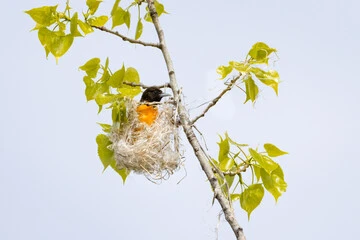
When it comes to Baltimore oriole nesting habits, the female is the undisputed master architect and builder. The male might flit around, singing his heart out to defend the territory, but the heavy lifting—quite literally—is all her. This process is a testament to instinct, skill, and sheer determination.
The journey begins with site selection. Orioles prefer open deciduous woodlands, forest edges, riverbanks, orchards, and even large parks with mature trees. They are particularly fond of elms, maples, and sycamores. The chosen site is almost always high up, typically between 20 to 50 feet above the ground, at the end of a slender, dangling branch. This strategic location isn’t just for the view; it provides crucial protection from predators like squirrels and snakes that find it difficult to navigate the thin, swaying branches.
Once the perfect fork in a branch is selected, the female gets to work. The construction can take anywhere from a few days to over a week. She starts by weaving long, flexible fibers back and forth to create a strong, anchored base. This is where her choice of materials becomes critical.
Key Building Materials Include:
- Plant Fibers: The primary material. She strips long, stringy fibers from plants like milkweed, grasses, and grapevine bark.
- Tree Fluff: Many Baltimore Orioles expertly snap up the soft, fluffy down that falls from cottonwood trees. This fluffy material is often used to line the inner chamber for ultimate softness and insulation.
- Human-made Fibers: In a pinch, orioles are known to use fishing line, dental floss, or strands of yarn left out by bird-loving humans. (Note: If you want to help, always use natural, untreated fibers like cotton yarn and cut it into short, 4-6 inch lengths to prevent entanglement).
- Spider Silk and Caterpillar Webbing: This is the secret weapon! She uses these incredibly strong, sticky silks to bind the larger fibers together and, crucially, to lash the very top of the nest to the branch supports. This gives the nest its legendary flexibility and strength.
A Closer Look: Anatomy of an Oriole Nest
So, what does the finished product look like? Calling it a “nest” hardly does it justice. It’s a deep, pendulous pouch, often described as a sock or a bag.
Typical Nest Specifications:
- Depth: 3 to 4 inches deep
- Shape: Gourd-like or elongated sack
- Entrance: A small opening at the top, leading down into the secure inner chamber
- Wall Thickness: Surprisingly thick and densely woven to protect against the elements
This design is brilliant for several reasons. The deep, narrow entrance helps keep eggs and nestlings securely inside, even during strong winds. The hanging nature deters ground predators, and the tightly woven walls provide excellent insulation from rain, sun, and cold.
From Eggs to Fledglings: The Oriole Breeding Cycle
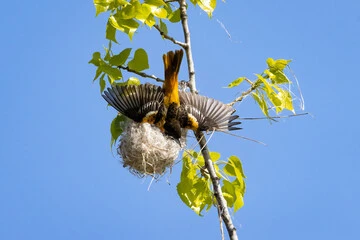
The nest is just the beginning. Once the architectural masterpiece is complete, the crucial phase of oriole breeding begins.
The breeding timeline typically unfolds like this:
| Stage | Duration | Key Events |
|---|---|---|
| Egg Laying | Begins 1-2 days after nest completion | The female lays a clutch of 3-7 eggs, usually one per day. The eggs are a pale bluish or grayish white with dark, irregular blotches. |
| Incubation | Approximately 12-14 days | The female handles all incubation duties. She is meticulously quiet and still during this period, relying on her camouflaged nest and its location to stay hidden. |
| Nestling Stage | About 12-14 days | Both parents work tirelessly to feed the hungry chicks a diet rich in insects, caterpillars, and berries. The nest’s deep walls help contain the active young. |
| Fledging | After ~14 days | The young orioles take their first flight, leaving the nest behind. They will continue to be fed and taught by their parents for several more weeks. |
It’s fascinating to note that Baltimore Orioles often raise only one brood per season, putting all their energy into ensuring that single clutch’s success. The nest itself, however, is rarely reused. It might serve as a cozy winter hideaway for other small birds, but by next spring, the orioles will build a brand-new one from scratch.
Identifying an Oriole Nest: What to Look For
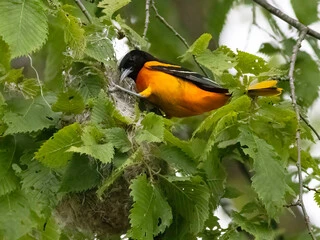
With so many birds building nests, how can you be sure you’ve found an oriole’s? Here’s a quick guide:
- Location: High in a deciduous tree (elm, maple, cottonwood), at the end of a drooping branch.
- Shape: Distinctive hanging pouch or sack, not a cup.
- Material: Looks woven from grayish, stringy fibers. You might see bits of fluff or even colored thread woven in.
- Time of Year: Look for active nests from late May through July in most of their range.
If you find a nest that’s resting on a branch or is a messy cup of mud and grass, you’re likely looking at the work of a different species, like a robin or a phoebe. The oriole’s hanging nest is unique and unmistakable.
Frequently Asked Questions (FAQ) Baltimore Oriole Bird Nest
Q: How long does it take a Baltimore Oriole to build its nest?
A: The female typically spends between 5 to 10 days meticulously weaving her nest. Poor weather or difficulty finding the right materials can extend this time.
Q: Can I attract orioles to nest in my yard?
A: Absolutely! The best way is to provide a suitable habitat. Plant native trees like maples, elms, and willows. Offer nesting materials by placing short strands of natural, un-dyed cotton yarn or dog fur in a suet cage. Most importantly, provide a food source—orange halves, grape jelly, and nectar feeders are irresistible to them.
Q: Do male orioles help build the nest?
A: No, the male does not participate in the construction. His role is to defend the territory with his song and chase away rivals. He may occasionally escort the female to show her a potential nest site, but she makes the final decision and does all the building.
Q: What happens to the nest after the birds leave?
A: The nest is almost always abandoned after the breeding season. It’s not reused by orioles the following year, but it may deteriorate naturally over the winter or be used by other species like house finches or chickadees for shelter.
Q: Are oriole eggs similar to other bird eggs?
A: They are unique in their pattern! While you might be familiar with white and brown spotted bird eggs from other species, oriole eggs have a very distinct look with their pale blue-gray base and dark, swirling speckles. For more on beautiful bird eggs, check out our guide on blue speckled bird eggs.
Q: How to Attract Orioles to Your Yard?
Conclusion: A Testament to Nature’s Genius
The Baltimore oriole bird nest is more than just a home; it’s a symbol of resilience, artistry, and the incredible instinct woven into the fabric of nature. From the careful selection of a single thread to the final, sturdy pouch swaying high in the summer canopy, every step is a calculated effort to ensure the survival of the next generation.
The next time you’re out on a walk in late spring, remember to look up. Scan the high branches of tall trees for that tell-tale woven sack. If you’re lucky enough to spot one, take a moment to appreciate the incredible craftsmanship and dedication that went into its creation. It’s a free masterpiece, hanging right there in the open for all to see.
We’d love to hear from you! Have you ever discovered an oriole nest in your neighborhood? What materials did you spot woven into its walls? Share your stories and photos in the comments below, and don’t forget to share this article with fellow bird enthusiasts to spread the wonder of these avian architects!