Budgie Bird Colors: Ultimate Vibrant Guide

If you’ve ever found yourself mesmerized by the stunning variety of budgie bird colors fluttering in a pet store or perched proudly in someone’s home, you’re not alone. These small parrots, also known as budgerigars, come in an astonishing array of hues that can rival any artist’s palette. From the classic green and yellow combinations to the more exotic violet and rainbow varieties, each budgie carries a unique story written in color.
Whether you’re a seasoned budgie owner or considering bringing one of these charming birds into your life, understanding the fascinating world of budgie colors will deepen your appreciation for these delightful companions. In this comprehensive guide, we’ll explore the science behind their colors, the different varieties you might encounter, and what makes each color mutation special.
Table of Contents
The Science Behind Budgie Bird Colors
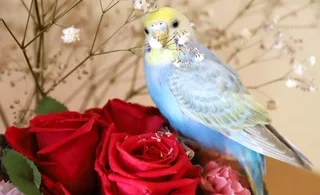
Budgie colors aren’t just random occurrences—they’re the result of complex genetic combinations and natural mutations. Understanding the science behind these colors helps explain why your feathered friend looks the way they do and what their appearance might tell you about their heritage.
Understanding Budgie Color Genetics
The foundation of all budgerigar color genetics lies in two primary types of budgies: yellow-base and white-base birds. Nearly all budgies fall into one of these categories, and this distinction forms the basis for all the color variations we see today.
Yellow-base budgies contain yellow pigment in their feathers, which results in the classic yellow and green coloration that most people associate with budgies. On the other hand, white-base budgies lack this yellow pigment, creating the foundation for blue, white, and other color variations.
The budgie color mutations occur when genes responsible for pigment production, distribution, or structure change. These mutations can affect:
- The amount of melanin (black/brown pigment) present
- The distribution of structural colors (which create blues and violets)
- The presence or absence of yellow pigments
- The intensity and clarity of colors
Understanding these genetic principles helps breeders create new color combinations and helps owners appreciate the uniqueness of their individual birds.
How Color Mutations Occur in Budgies
Color mutations in budgies happen through natural genetic variations that can be passed down from parent to offspring. These mutations aren’t necessarily “defects”—they’re simply variations in the genetic code that result in different appearances. Many of these mutations occurred naturally in the wild population of budgerigars in Australia before being captured and bred in captivity.
When breeders selectively pair birds with specific color traits, they can produce offspring with predictable color combinations. However, some mutations are recessive, meaning both parents must carry the gene for it to appear in their offspring. This is why some colors are rarer than others in the budgie population.
Classic Budgie Colors: Green and Yellow Varieties
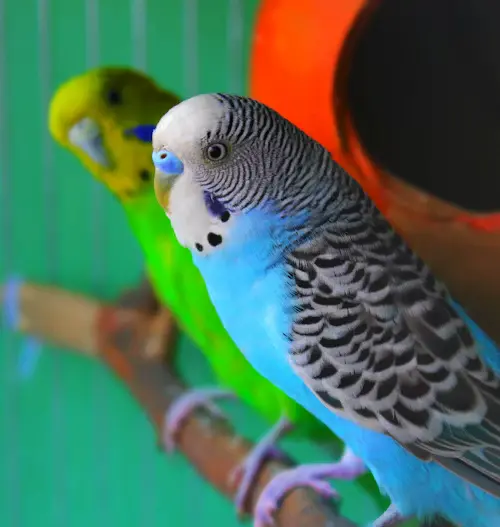
The traditional green and yellow coloration of budgies is what most people picture when they think of these birds. This classic combination represents the original wild-type coloration and remains one of the most popular choices among budgie enthusiasts.
The Original Wild-Type Green Budgie
The original wild budgie, found in the Australian outback, features a distinctive pattern of bright yellow with black striping on the head and wings, combined with blue and green flight feathers. This coloration served as excellent camouflage in their natural grassland habitat.
Green budgie varieties come in several shades, from light yellow-green to deep forest green. The intensity of the green color depends on the amount of yellow pigment present and how it combines with the structural blue color created by the feather structure.
Some popular green color variations include:
- Light Green: The most common variety, featuring bright yellow with green flight feathers
- Dark Green: A richer, more intense green coloration
- Olive Green: A darker, more muted green with brownish undertones
- Grey-Green: A unique combination of grey and green coloring
Each of these variations maintains the characteristic black striping on the head and wings that helps identify a bird as a budgie.
Yellow Budgie Variations and Their Characteristics
While yellow budgies might seem simple at first glance, they actually come in various shades and patterns. The yellow coloration in budgies comes from carotenoid pigments that the birds obtain through their diet and process through their bodies.
Yellow budgie variations include:
- Bright Yellow: A vibrant, almost neon yellow that’s particularly striking
- Pale Yellow: A softer, more pastel version of the classic yellow
- Yellow with Grey Markings: Yellow bodies with the traditional grey/black head markings
These yellow varieties often have dark eyes and grey feet, creating a beautiful contrast with their bright plumage. Some yellow budgies may also have faint striping on their backs or wings, while others display a more uniform color.
Blue Budgie Colors: From Sky Blue to Deep Navy
Blue budgies represent one of the most dramatic departures from the traditional green and yellow coloration. These birds lack the yellow pigment that creates the green coloration, resulting in a stunning array of blue shades.
Understanding Blue Budgie Color Variations
Blue budgie colors range from the palest sky blue to deep, rich navy shades. The blue color in budgies isn’t created by pigments but by the structure of their feathers, which refract light to create the blue appearance.
The different blue variations include:
- Sky Blue: A light, airy blue that’s almost white in some lighting
- Cobalt Blue: A medium blue with excellent color saturation
- Mauve: A deeper blue with purple undertones
- Violet: A rich blue with distinct purple highlights
- Grey: Technically a very dark blue that appears grey to the human eye
Each of these blue varieties maintains the characteristic black striping on the head, though the contrast may be less pronounced than in green or yellow varieties.
The Genetics Behind Blue Coloration
The blue coloration in budgies results from the absence of yellow pigment. When a budgie lacks the yellow pigment (due to a genetic mutation), the structural blue color becomes visible throughout the body instead of being masked by yellow.
This means that blue budgies are essentially white-base birds that have developed the structural blue coloration in their feathers. The intensity of the blue color depends on the density and structure of the feather barbs, which affect how light is refracted.
Understanding this genetic basis helps explain why blue and green budgies can produce different colored offspring, depending on which genes each parent carries.
Purple and Violet Budgie Shades
Among the most striking and sought-after budgie bird colors are the purple and violet varieties. These birds display rich, regal coloration that sets them apart from more common color mutations.
Identifying True Violet Budgies
True violet budgies are relatively rare and highly prized among budgie enthusiasts. These birds display a deep, rich purple coloration that can appear almost black in certain lighting conditions but reveals its true violet nature in bright light.
The violet mutation affects how light is refracted through the feather structure, creating a unique purple hue. Violet budgies can appear in several combinations:
- Violet Green: Violet coloring combined with green body feathers
- Violet Blue: Violet coloring combined with blue body feathers
- Violet Grey: An extremely dark violet that appears almost black
Identifying a true violet budgie requires careful observation of the bird in different lighting conditions, as the color can appear dramatically different depending on the light source.
The Rarity and Appeal of Purple Budgies
Purple budgies, including violet varieties, are considered among the more exotic and rare budgie bird colors. Their rarity stems from the specific genetic combinations required to produce the violet mutation, as well as the careful breeding practices needed to maintain the color intensity.
The appeal of purple budgies lies not just in their rarity but in their stunning appearance. The rich, deep colors create a regal, almost jewel-like appearance that many budgie enthusiasts find irresistible.
As noted in discussions on Reddit’s budgie community, while personality traits are hereditary, color mutations can alter the way pigments are distributed and expressed, making each purple budgie unique in its coloration.
Rainbow and Multi-Colored Budgie Varieties
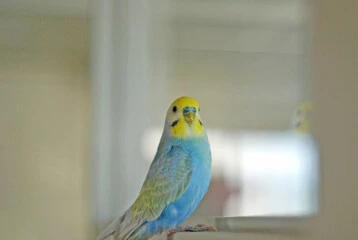
For those seeking the most visually striking budgies, rainbow budgie colors offer an explosion of hues that seem almost too vibrant to be real. These birds display multiple colors in their plumage, creating a living work of art.
What Makes a Budgie a “Rainbow” Variety?
Rainbow budgies aren’t a specific genetic mutation but rather the result of multiple color mutations combining in a single bird. These birds typically display at least three distinct colors in their plumage, creating a truly spectacular appearance.
Common rainbow combinations include:
- Yellow, Blue, and White: Creating a tri-color effect
- Green, Yellow, and Blue: Combining both yellow-base and white-base colors
- Purple, Blue, and Yellow: Featuring the rare violet mutation with other colors
These multi-colored birds often result from careful breeding programs that combine different color mutations to achieve the desired rainbow effect.
Caring for Multi-Colored Budgie Varieties
While rainbow budgies don’t require different care than single-color varieties, their striking appearance often makes them the center of attention in any home. Owners of rainbow budgies should ensure their birds receive plenty of mental stimulation and social interaction to match their vibrant personalities.
It’s worth noting that the more complex the color genetics, the more careful breeders need to be about maintaining genetic health. Reputable breeders focus not just on color but on overall bird health and temperament.
Lutino Budgie Color: The Beautiful Albino Variation
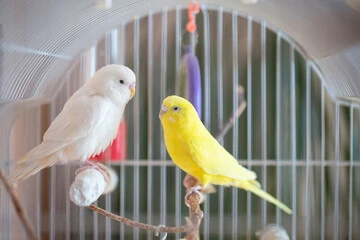
Among the most distinctive budgie bird colors is the lutino variety, which creates birds that appear almost albino with their pure white or yellow feathers and striking red eyes.
Understanding the Lutino Mutation
The lutino mutation is a form of albinism that affects the production of melanin, the pigment responsible for black and brown colors in birds. Lutino budgies lack all dark pigmentation, resulting in their characteristic appearance.
Key features of lutino budgies include:
- Pure white or bright yellow body feathers
- Red or pink eyes (due to the lack of eye pigmentation)
- Pink feet and legs
- Absence of black striping on the head and wings
The lutino mutation can occur in both yellow-base and white-base budgies, though the visual differences may be subtle to the untrained eye.
Health Considerations for Lutino Budgies
While lutino budgies are beautiful, they do require some special considerations due to their lack of pigmentation. The absence of eye pigmentation can make them more sensitive to bright light, so providing shaded areas in their environment is important.
Additionally, some lutino budgies may be more prone to certain health issues related to their genetic mutation. Regular veterinary check-ups and careful attention to their overall health are essential for these special birds.
As one concerned owner shared on a budgie forum, when their lutino bird showed color changes, they wisely sought veterinary advice. The bird was likely a creamino (a variation of the lutino mutation) rather than a true albino, demonstrating the importance of understanding the specific characteristics of different color mutations.
Rare and Unusual Budgie Color Mutations
Beyond the more common colors, budgie enthusiasts can find an array of rare and unusual color mutations that push the boundaries of what we think of as “normal” budgie colors.
Exploring Uncommon Color Variations
Some of the rarest and most unusual budgie colors include:
- Fallows: Budgies with diluted coloration and red eyes
- Opalines: Birds with altered feather patterns that create unique color distributions
- Spangles: Budgies with reversed feather patterns that create a “laced” appearance
- Cinnamons: Birds with brown rather than black markings
- Inos: Complete absence of melanin, creating pure white or yellow birds
These rare mutations often result from specific genetic combinations that occur infrequently in the general budgie population. Some, like the purple and green combination mentioned in online forums, may seem almost mythical to new budgie owners but are indeed real, though extremely rare.
The Role of Selective Breeding in Color Development
The development of these rare colors is largely due to the efforts of dedicated budgie breeders who have spent decades selectively breeding birds to enhance and stabilize specific color mutations. Through careful genetic planning and responsible breeding practices, they’ve created the stunning array of colors we see today.
However, it’s important to note that responsible breeders prioritize health and temperament alongside color. The most ethical breeders ensure that their birds are not only beautiful but also healthy and well-socialized.
Choosing the Right Budgie Color for Your Home
With so many beautiful budgie bird colors available, how do you choose the right one for your home and lifestyle? While color is certainly an important consideration, it shouldn’t be the only factor in your decision.
Does Color Affect Budgie Personality?
One common question among prospective budgie owners is whether different colors affect a bird’s personality. While some people believe that certain colors are associated with specific personality traits, there’s no scientific evidence to support this claim.
As discussed in various budgie communities, personality traits are hereditary, but no bird inherits 100% of their parents’ personality traits. Color mutations may alter the way pigments are distributed, but they don’t fundamentally change a bird’s temperament.
What does matter more than color is:
- Individual bird temperament
- Socialization and handling
- Environment and care
- Compatibility with other birds
Housing Different Colored Budgies Together
If you’re considering multiple budgies, you might wonder whether different colored birds can live together harmoniously. The good news is that budgies don’t discriminate based on color when forming social bonds.
As one experienced budgie owner noted, you can house budgies together if the cage is large enough and if they get along. The color doesn’t matter when it comes to social compatibility. What’s more important is ensuring that:
- The cage is large enough for multiple birds
- There are plenty of perches and toys to prevent territorial behavior
- The birds are introduced gradually and monitored for compatibility
- Each bird has access to food, water, and attention
Caring for Your Colorful Companion
Regardless of your budgie’s color, proper care is essential for maintaining their health and the vibrancy of their plumage. A well-cared-for budgie will display brighter, more intense colors than one that’s poorly nourished or stressed.
Nutrition and Its Impact on Feather Color
A budgie’s diet plays a crucial role in maintaining the health and vibrancy of their feathers. Essential nutrients for healthy feather development include:
- Protein: Necessary for feather structure and growth
- Vitamins A and D: Important for skin and feather health
- Calcium: Essential for overall health and feather quality
- Carotenoids: Pigments that contribute to yellow and orange coloration
High-quality budgie pellets, fresh vegetables, and occasional treats provide the nutrients needed for vibrant plumage. Avoiding a seed-only diet is important, as seeds lack many essential nutrients.
Environmental Factors That Affect Color
Several environmental factors can influence how your budgie’s colors appear:
- Lighting: Natural sunlight helps colors appear more vibrant
- Clean water: Essential for overall health and feather quality
- Stress levels: Stressed birds may have duller plumage
- Air quality: Clean air helps maintain healthy feathers
Providing a clean, stimulating environment with appropriate lighting and minimal stress helps ensure your budgie displays their colors at their best.
The Art of Budgie Color Identification
Learning to identify different budgie colors and understand what they mean can be a rewarding aspect of budgie ownership. Whether you’re trying to determine your bird’s specific mutation or simply want to appreciate their unique beauty, color identification adds another layer to your relationship with your feathered friend.
Tools and Resources for Color Identification
Several resources can help you identify your budgie’s specific color mutation:
- Budgie color charts: Available online and in budgie care books
- Breeders and clubs: Experienced breeders can often identify specific mutations
- Veterinary consultation: Avian vets can help identify health-related color changes
- Online communities: Forums and social media groups dedicated to budgie care
One excellent resource is the comprehensive budgie color chart available through various budgie enthusiast websites, which provides detailed information about all recognized color mutations.
Common Misidentifications and How to Avoid Them
Many budgie owners initially misidentify their bird’s color, especially when dealing with rare or complex mutations. Common misidentifications include:
- Mistaking a dark green for a blue
- Confusing a lutino with an albino
- Not recognizing the subtle differences between similar mutations
To avoid these misidentifications:
- Observe your bird in different lighting conditions
- Compare with reliable color charts and photos
- Consult with experienced budgie owners or breeders
- Take multiple photos in different lighting to capture true colors
The Future of Budgie Colors
The world of budgie colors continues to evolve as breeders work to create new mutations and enhance existing ones. However, this pursuit of new colors must be balanced with ethical considerations and a commitment to bird health.
Ethical Breeding Practices
Responsible budgie breeding focuses on:
- Health over appearance: Prioritizing the health and well-being of birds
- Genetic diversity: Maintaining healthy gene pools to prevent inbreeding
- Temperament: Breeding for good temperaments alongside beautiful colors
- Education: Sharing knowledge about proper budgie care
As the demand for rare and unusual colors increases, it’s important for owners to support breeders who prioritize the health and welfare of their birds over profit.
Trends in Budgie Color Preferences
Current trends in budgie colors show increasing interest in:
- Rainbow and multi-colored varieties
- Rare mutations like violet and rainbow
- Unique pattern combinations
- Health and temperament alongside color
However, classic colors like green and blue remain popular due to their beauty and the ease of finding information about their care.
Frequently Asked Questions About Budgie Bird Colors
Are certain budgie colors healthier than others?
No specific budgie color is inherently healthier than others. Health depends more on genetics, diet, and care than on color. However, some rare mutations may be associated with specific health considerations, such as light sensitivity in lutino birds.
Do budgie colors change as they age?
Budgies can experience some color changes as they mature. Young budgies often have different coloring than adults, and some mutations become more pronounced with age. However, dramatic color changes in adult birds should be evaluated by a veterinarian.
Can I breed my budgie to get specific colors?
While you can influence the colors of budgie offspring through selective breeding, it requires knowledge of budgie genetics and access to birds with specific mutations. For most pet owners, it’s better to appreciate the natural colors of their birds rather than attempting to breed for specific colors.
Do different colored budgies have different lifespans?
There’s no evidence that budgie color affects lifespan. With proper care, all budgies can live 5-10 years or longer, regardless of their coloration.
Are rare colored budgies more expensive?
Generally, yes. Rare color mutations often command higher prices due to their scarcity and the specialized breeding required to produce them. However, price shouldn’t be the primary consideration when choosing a budgie.
Conclusion: Celebrating the Diversity of Budgie Bird Colors
The world of budgie bird colors is a testament to nature’s creativity and the dedication of breeders who have worked to enhance and preserve these beautiful variations. From the classic green and yellow of the wild budgerigar to the stunning rainbow varieties available today, each color tells a story of genetic heritage and careful breeding.
No matter what color your budgie friend is, they’re sure to bring a splash of beauty and personality to your home. Embrace the diversity of budgie colors, learn about the fascinating genetics behind them, and most importantly, enjoy the companionship of your colorful feathered friend.