How Do I Keep Squirrels Away From My Bird Feeder? Happy Proven Tips

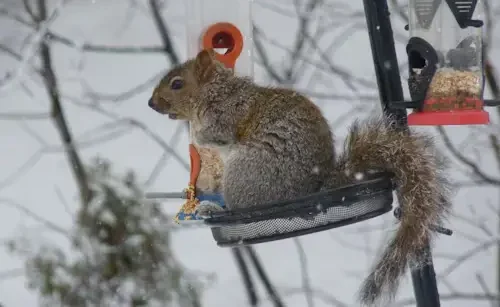
Picture this: You’ve spent a beautiful morning carefully filling your brand-new bird feeder with premium seed, strategically positioning it where you can enjoy the view from your kitchen window. You’re sipping your coffee, waiting for the first colorful finch or cheerful chickadee to arrive. Instead, within minutes, a furry, four-legged bandit arrives. With astonishing agility, it leaps, climbs, and contorts its way onto the feeder, scattering seed everywhere and devouring everything in sight. Your feathered friends are left watching helplessly from the nearby branches. If this scenario sounds all too familiar, you’re not alone. The age-old battle between bird enthusiasts and determined squirrels is a common challenge, but it’s one you can win.
The good news is that learning how do i keep squirrels away from my bird feeder doesn’t require magic or expensive, high-tech solutions. It’s about understanding squirrel behavior, using a combination of clever deterrents, strategic placement, and sometimes a little patience. This comprehensive guide will walk you through proven methods, from simple DIY fixes to more advanced squirrel-proofing systems, ensuring your backyard becomes a haven for birds, not a buffet for squirrels.
Table of Contents
Why Squirrels Are So Good at Raiding Bird Feeders
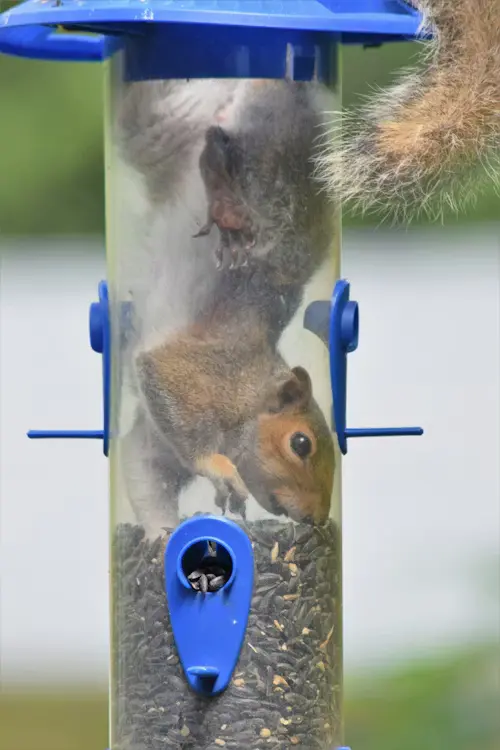
Before diving into solutions, it’s crucial to understand your opponent. Squirrels are incredibly intelligent, agile, and persistent creatures. They possess several traits that make them formidable feeder raiders:
- Exceptional Climbers and Jumpers: Squirrels can jump up to 10 feet vertically and 15 feet horizontally. They can climb almost any surface, including smooth metal poles, with ease.
- Problem Solvers: They learn quickly. If one method of access is blocked, they’ll often find another way or wait for an opportunity.
- Strong and Determined: Their powerful jaws can chew through wood, plastic, and even some metals. They are not easily discouraged.
- Excellent Memory: They remember locations of food sources and will return regularly.
Understanding these traits helps explain why a single deterrent often isn’t enough. A multi-layered approach is usually the most effective strategy.
The Foundation: Strategic Placement and Feeder Choice
The first line of defense is often the simplest: making it physically difficult for squirrels to reach your feeder.
1. The Power of Distance and Height
- Height Matters: Hang your feeder at least 5-6 feet off the ground. This makes it harder for ground-based squirrels to jump up.
- Clear the Landing Zone: Ensure there’s a minimum of 8-10 feet of clear space around the feeder in all directions. This prevents squirrels from using nearby trees, fences, or structures as launching pads.
- Avoid Overhanging Branches: Trim back any tree branches that hang within 10-12 feet of the feeder. Squirrels are masters of using these as bridges.
2. Choosing the Right Feeder: Squirrel-Proof Bird Feeders
The market offers a wide range of feeders specifically designed to deter squirrels. Here’s a breakdown of the most effective types:
| Feeder Type | How It Works | Pros | Cons |
|---|---|---|---|
| Weight-Activated (Tilt/Perch) | Uses a mechanism that closes access ports when a heavier animal (like a squirrel) lands on the perch. | Effective against most squirrels, allows smaller birds easy access. | Some larger birds (like cardinals) may accidentally trigger it. Mechanism can sometimes jam. |
| Cage-Style | Encloses the feeding ports within a metal cage. Birds can access seed through small holes, but squirrels cannot reach inside. | Very effective, durable, simple design. | Can limit access to larger desirable birds. Seed can sometimes get stuck. |
| Baffled (Top or Bottom) | Features a physical barrier (often a dome or cone) that prevents squirrels from climbing up or down the pole. | Highly effective when properly installed. | Requires a sturdy pole and proper installation. |
| Suspended (Hanging with Baffles) | Hangs from a wire or pole with a baffle installed above or below to block access. | Can be very effective with the right setup. | Requires secure mounting and baffles. |
| Tube Feeders with Small Ports | Uses small feeding ports that are difficult for squirrels to access. | Simple, often less expensive. | Less effective than other types; determined squirrels can still find ways. |
When selecting a feeder, consider the types of birds you want to attract. A cage-style feeder might be perfect for finches and chickadees but could exclude larger woodpeckers or grosbeaks.
The Essential Tool: Baffles for Bird Feeder Squirrels
Even the best feeder needs backup. This is where baffles for bird feeder squirrels come in. Baffles are physical barriers that block a squirrel’s path to the feeder.
Types of Baffles
Dome Baffles (Top Baffles): These are umbrella-shaped or dome-shaped shields that sit above the feeder on the hanging wire or pole. When a squirrel tries to climb down from above, it hits the dome and slides off.
- Installation: Must be positioned at least 4-5 feet above the ground and large enough (typically 17-22 inches in diameter) to prevent the squirrel from reaching around it.
- Effectiveness: Highly effective when properly sized and positioned.
Cone Baffles (Bottom Baffles): These are cone-shaped shields that sit below the feeder on a pole. They prevent squirrels from climbing up from the ground.
- Installation: Must be mounted on a sturdy pole, at least 4-5 feet above the ground. The cone should be wide enough (typically 15-18 inches) and point downward.
- Effectiveness: Very effective, but requires a pole system.
Stovepipe Baffles: A simple and often DIY-friendly option. A length of smooth, galvanized steel stovepipe is placed around the pole below the feeder.
- Installation: The pipe must be at least 6 feet long and the pole must be too smooth for the squirrel to grip inside the pipe.
- Effectiveness: Excellent for pole-mounted feeders.
Choosing the Right Baffle
- Dome Baffles are ideal for hanging feeders.
- Cone Baffles work best with pole-mounted feeders.
- Stovepipe Baffles are a cost-effective solution for pole systems.
For maximum protection, many experts recommend using both a top and bottom baffle, creating a “squirrel sandwich” that’s nearly impossible to bypass.
Natural and Non-Toxic Deterrents
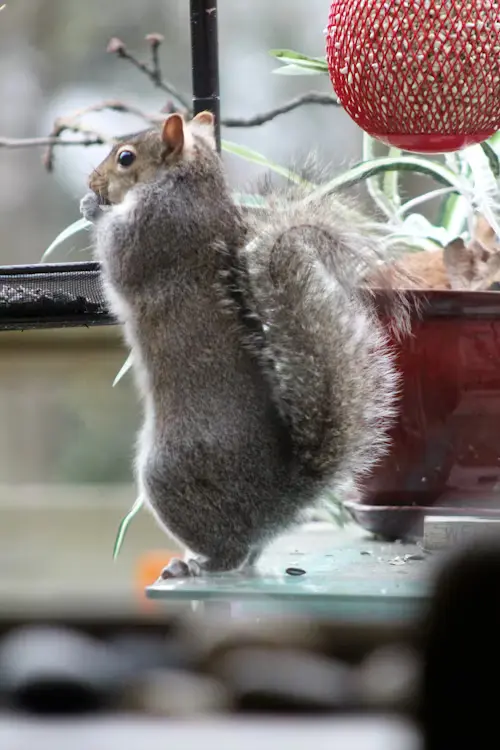
If you prefer to avoid mechanical solutions or want to add an extra layer of protection, several natural deterrents can be effective.
1. Spicy Squirrel Bird Seed: A Natural Repellent
One of the most popular and scientifically backed methods is using spicy squirrel bird seed. Birds have a different taste system than mammals and are generally unaffected by capsaicin, the compound that makes peppers hot.
- How It Works: Capsaicin irritates the taste buds and mucous membranes of mammals like squirrels, making the seed unpalatable. Birds, lacking the receptors for capsaicin, can eat it without any issues.
- Types of Spicy Seed:
- Pre-Treated Seed: Many brands sell safflower seed or mixed seed that’s already treated with capsaicin.
- DIY Treatment: You can sprinkle cayenne pepper or hot sauce on your existing seed. However, pre-treated seed often provides a more consistent and longer-lasting effect.
- Application: Simply fill your feeder with the spicy seed as you would with regular seed. Reapply the treatment periodically, especially after rain.
- Effectiveness: This is often one of the most effective natural deterrents. Many users report immediate results.
2. Squirrel Repellent for Feeders: Commercial Options
The market offers various commercial squirrel repellents for feeders. These typically come in spray or granular form and use scents or tastes that squirrels dislike.
- Common Ingredients: Peppermint oil, predator urine (like fox or coyote), garlic, and other natural irritants.
- Application: Follow the manufacturer’s instructions carefully. Most require regular reapplication, especially after rain or heavy dew.
- Effectiveness: Varies widely depending on the product and the individual squirrels in your area. Some users find them very helpful, while others see little effect.
3. Habitat Modification: Making Your Yard Less Appealing
Sometimes the best way to deter squirrels is to make your entire yard less attractive to them.
- Remove Other Food Sources: Secure trash cans, clean up fallen fruit and nuts, and avoid feeding other wildlife.
- Use Squirrel-Resistant Plants: Plant flowers and shrubs that squirrels tend to avoid, such as daffodils, alliums, hyacinths, and marigolds.
- Provide Alternative Feeding Stations: Some people choose to set up a separate, less desirable feeding area for squirrels, far from their bird feeders. This can sometimes work, though it may attract more squirrels to your yard.
Advanced Strategies: Creating a Squirrel-Proof Zone
For those dealing with particularly clever or persistent squirrels, a more comprehensive approach may be necessary.
1. The Pole and Baffle System
This is often considered the gold standard for squirrel-proofing.
- Components: A sturdy metal pole, a cone baffle mounted near the base, and a dome baffle mounted above the feeder.
- Installation: The pole must be securely anchored in the ground. The cone baffle should be at least 4-5 feet above the ground. The dome baffle should be large enough and positioned correctly.
- Benefits: Creates a nearly impenetrable barrier. Can support multiple feeders.
2. The “Hanging Bird Feeder Squirrel Guard” Method
This involves suspending your feeder from a wire with multiple deterrents.
- Components: A strong wire or cable, a dome baffle, and possibly a weight-activated feeder.
- Installation: The wire should be taut and at least 10 feet long between support points. The baffle must be positioned correctly to prevent climbing.
- Benefits: Can be very effective for hanging feeders. Allows for creative placement.
3. Timing and Rotation
- Feed at Specific Times: Some people choose to put out feeders only during peak bird activity times (early morning and late afternoon) and remove them at night when squirrels are less active.
- Rotate Feeder Locations: Moving your feeder to different spots in your yard can sometimes confuse squirrels and make it harder for them to establish a routine.
Best Squirrel Deterrents for Birds: What Actually Works
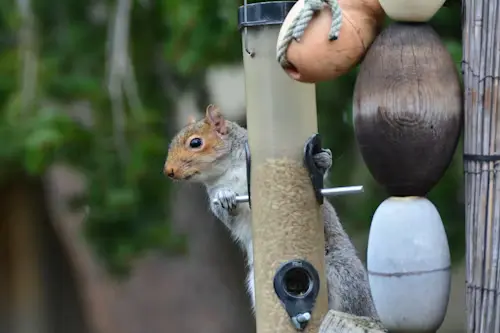
When evaluating the best squirrel deterrents for birds, it’s important to consider effectiveness, cost, ease of use, and impact on birds.
- Spicy Seed (Capsaicin-Treated): High effectiveness, low to moderate cost, easy to use, bird-safe.
- Weight-Activated Feeders: High effectiveness, moderate to high cost, easy to use, bird-safe.
- Cage-Style Feeders: High effectiveness, moderate cost, easy to use, may limit some larger birds.
- Baffle Systems (Dome/Cone): High effectiveness, moderate cost, requires installation, bird-safe.
- Commercial Repellents: Variable effectiveness, low to moderate cost, requires frequent reapplication, generally bird-safe.
- Habitat Modification: Moderate effectiveness, low cost, requires ongoing effort, bird-safe.
The “best” deterrent often depends on your specific situation, budget, and the squirrels in your area. Many successful birdwatchers use a combination of these methods.
Common Mistakes to Avoid
Even with the best intentions, it’s easy to make mistakes that undermine your efforts.
- Incorrect Baffle Placement: Baffles that are too small, too low, or incorrectly positioned are ineffective.
- Ignoring Seed Spillage: spilled seed on the ground is a major attractant. Use seed catchers or feeders with minimal spillage.
- Using Flimsy Mounting: Squirrels can easily knock over or pull down poorly secured feeders.
- Giving Up Too Soon: Squirrels are persistent. It may take time for them to learn that your feeder is no longer an easy target.
- Using Harmful Methods: Avoid poisons, glue traps, or other methods that can harm squirrels, other wildlife, or pets.
FAQ: How Do I Keep Squirrels Away From My Bird Feeder
Q: How do I keep squirrels away from my bird feeder without spending a lot of money?
A: Start with spicy squirrel bird seed and ensure your feeder is hung at least 5-6 feet high with 8-10 feet of clear space around it. A simple DIY stovepipe baffle can also be very effective.
Q: Are weight-activated feeders really effective?
A: Yes, they are generally very effective. However, ensure the mechanism is well-made and clean it regularly to prevent jamming.
Q: Will a baffle work if I have a hanging feeder?
A: Absolutely. A dome baffle installed above a hanging feeder is a highly effective solution.
Q: Can I use cayenne pepper on my existing bird seed?
A: Yes, you can sprinkle cayenne pepper on your seed. However, pre-treated seed often provides a more consistent and longer-lasting effect.
Q: What if I have a lot of squirrels in my area?
A: In areas with high squirrel populations, a multi-layered approach is essential. Combine a squirrel-proof bird feeder with a baffle for bird feeder squirrels and spicy seed for maximum effectiveness.
Q: Are there any bird-safe squirrel repellents?
A: Yes, repellents based on natural ingredients like peppermint oil or capsaicin are generally safe for birds. Always check the label to ensure they are bird-safe.
Conclusion: Enjoying a Squirrel-Free Bird Feeding Experience
Learning how do i keep squirrels away from my bird feeder is a journey that requires patience, experimentation, and a bit of strategy. There’s no single magic bullet, but by understanding squirrel behavior and implementing a combination of proven methods, you can reclaim your feeder for the birds.
Start with the basics: strategic placement, a good quality feeder, and a reliable baffle. Add spicy squirrel bird seed for an extra layer of protection. If needed, explore more advanced options like weight-activated feeders or a comprehensive pole and baffle system.